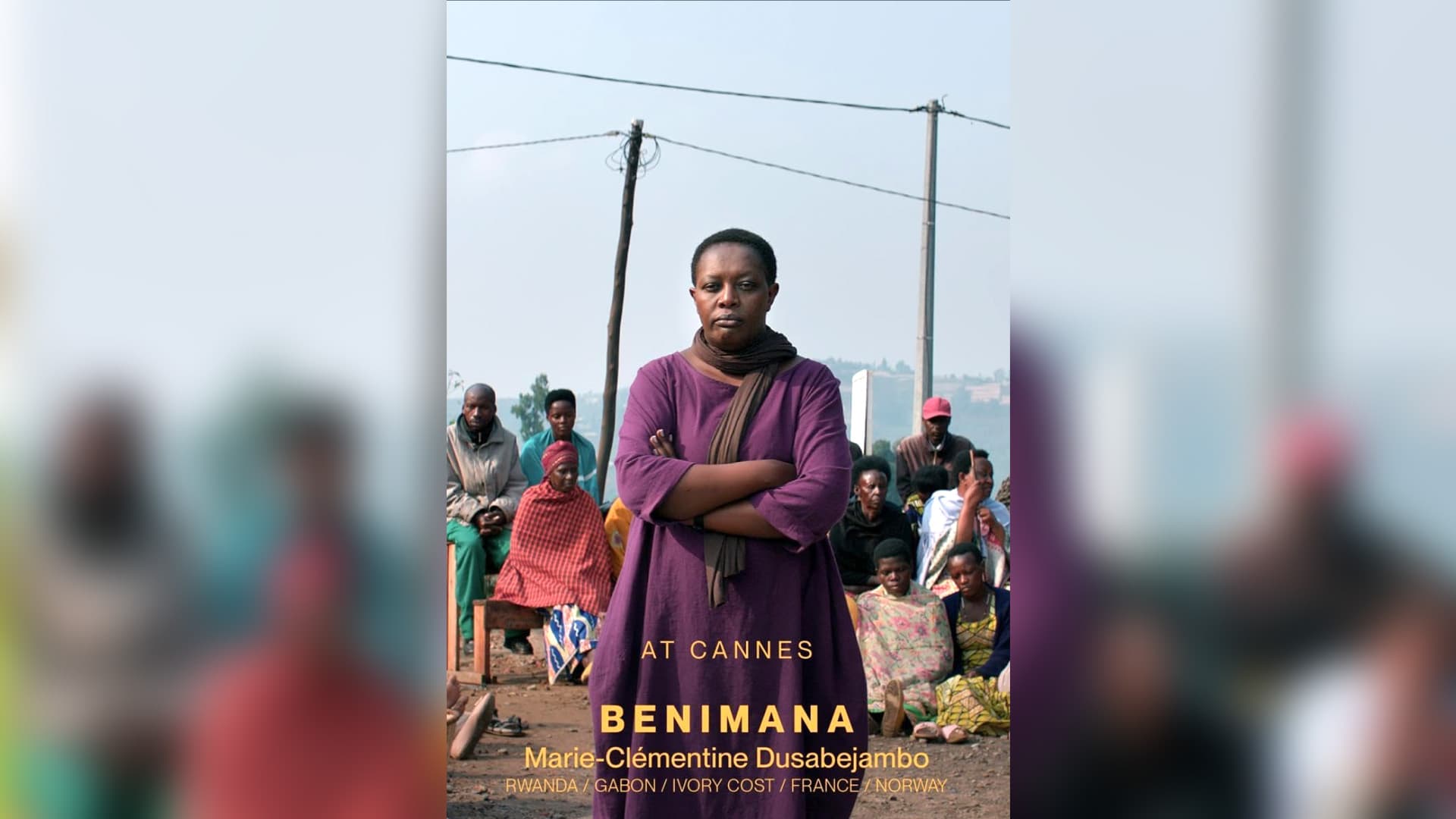

Ben'Imana, directed by Marie-Clementine Dusabejambo
Rwanda, Gabon, France, Norway | 2026 | Fiction | 101 min | Kinyarwanda w/ subtitles
The title Ben’Imana means “the children of God,” signifying the shared culture of Hutus and Tutsis in Rwanda. In 1994 Hutu militias massacred many thousands of Tutsis. Rural villages in Rwanda bore witness to devastating bloodshed. Now eighteen years later, a traditional elder-run community court assembles as part of the national reconciliation program designed to break the cycle of neighbor-on-neighbor violence.
At the tribunal in the village of Kibeho, Vénéranda (Clémentine U. Nyirinkindi) publicly forgives the villager who slaughtered countless of her relatives and in-laws. Vénéranda is committed to moving forward constructively. But her sister Suzanne (Isabelle Kabano) responds in fury: Vénéranda has no right to forgive the man who murdered Suzanne’s own husband and three-month-old baby.
Is it possible to forgive rather than seek justice? Answers are not simple, least of all when survivors of coexist alongside perpetrators, their histories deeply tangled. At the local church women share their stories in preparation to testify. Some are victims of the terror, and some are relatives of its perpetrators, exploring the issue from the inside out, wrangling with their relatives’ unpunished murders.
Like the village, the film is caught between the desire for justice and the search for forgiveness. At Cannes this year, it won the Camera d’Or for the best debut.