
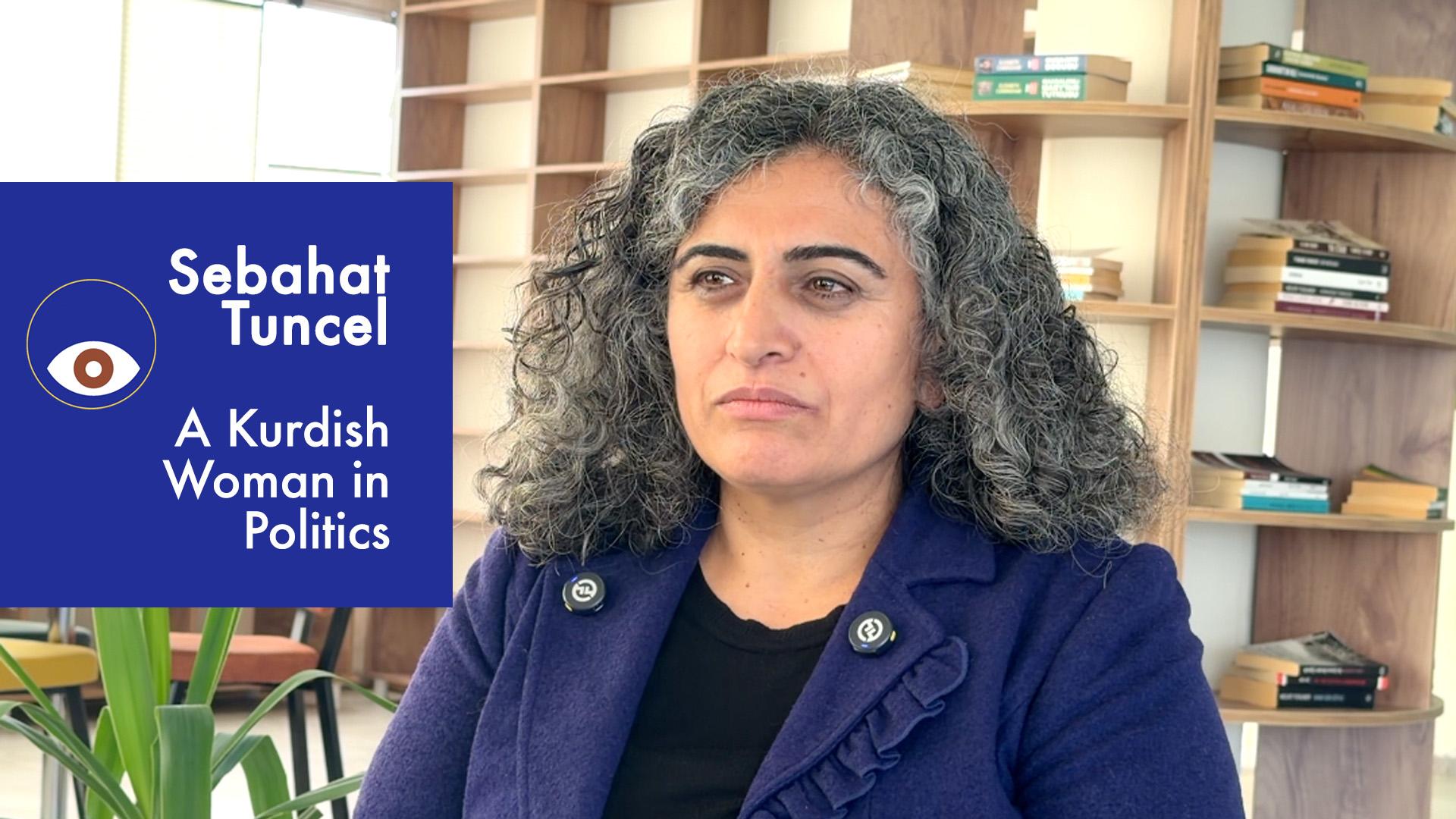

When I was in Diyarbakir in March 2023, I chose to interview Sebahat Tuncel because of her long and steadfast commitment to Kurdish and women’s freedom. In our interview, she reflects on her remarkable career.
Biography and Political Awakening
Sebahat Tuncel grew up in a leftist, socialist family who were critical of the Turkish state. When her aunt joined the Kurdish guerrilla movement, she began her own political awakening, question the circumstances of the Kurdish people in Türkiye.
As a Kurd, an Alevi, and a woman, Tuncel came to recognize overlapping forms of discrimination: Türkiye denied Kurdish identity, marginalized Alevi religious identity, and subjected women to patriarchal domination. In 1998, after graduating from university, she moved to Istanbul and began political organizing, initially in neighborhood and women’s commissions. As her talent blossomed, she subsequently held leadership positions in successive Kurdish-oriented political parties, including HADEP, DTP, BDP, and HDP, as well as the Democratic Regions Party (DBP).
When Turkish authorities closed these organizations, resilient Kurds founded new ones to continue their political work. Tuncel describes her political career as an uninterrupted struggle for Kurdish rights, democracy, and women’s liberation.
From Parliamentarian to Political Prisoner
Tuncel’s experiences in prison illustrate the Turkish state’s systematic criminalization of Kurdish political activity.
Her first imprisonment occurred while she was a spokesperson for the women’s assembly within DEHAP. She was falsely accused of connections to the Kurdistan Workers’ Party (PKK), convicted, and she spent eight months in prison. She was later acquitted.
www.youtube.com/watch?v=5YXwjdOQxik
While she was in prison, Tuncel was nominated as an independent candidate in the 2007 parliamentary elections. Kurdish candidates ran as independents in order to circumvent Türkiye's 10 percent electoral threshold. Tuncel won, becoming the first woman to be elected to Türkiye's parliament while imprisoned.
She recalls the irony: in the 1990s, the Kurdish parliamentarian Leyla Zana and her colleagues were removed from parliament and imprisoned. In 2007, Kurdish voters sent a woman from prison into parliament.
Although the Kurdish MPs initially numbered only about twenty, they used their seats in parliament to publicize the Kurdish conflict, women’s rights, labor struggles, and the concerns of marginalized communities. If they could not pass legislation, Tuncel recalls, they could at least ensure that the governing parties did not sit comfortably in parliament.
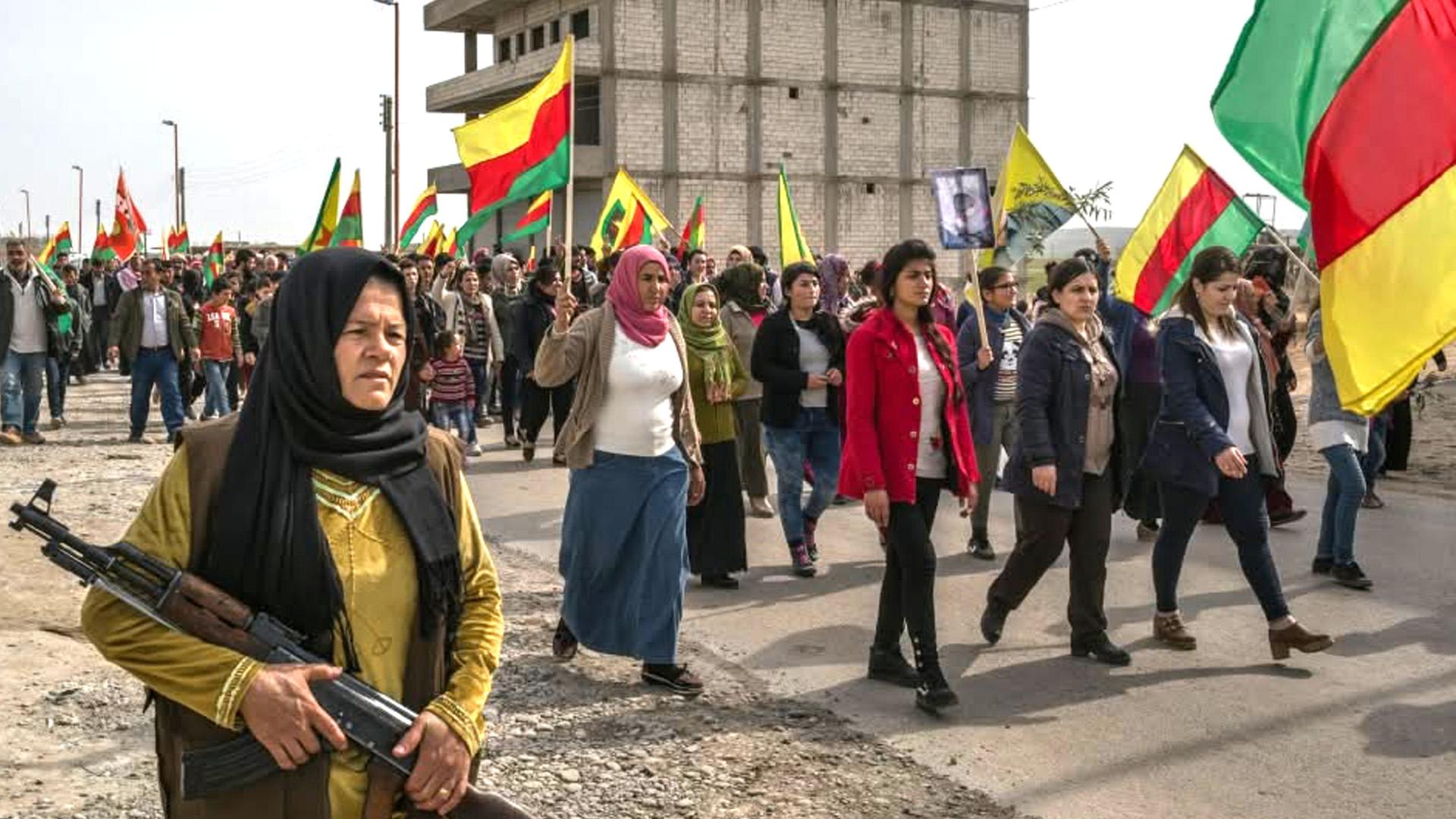
Her second prolonged imprisonment began in 2016, while Kurds were demonstrating to express of solidarity with the people of Kobani in Syria. (Kobani was then being besieged by ISIS, while Turkish forces stood by and watched.) The Turksih state cracked down on Kurdish politicians for participating, arresting them. Tuncel was detained while protesting their arrests and was then prosecuted in the wider Kobani case against those who demonstrated.
That time she spent seven and a half years in prison and was released, but the proceedings against her are continuing to this day.
The Turkish state consistently treats pro-Kurdish speeches, demonstrations, and legitimate political activities as criminal offenses. Still, she hopes the current peace negotiations will not only open the way toward resolving the Kurdish issue in Türkiye and bring an end to political imprisonments.
The People’s Democratic Congress (HDK)
Tuncel describes the formation of the People’s Democratic Congress (HDK) as an attempt to create a new model of democratic politics in Türkiye.
The HDK brought together various leftist groups not as a political party but as an umbrella congress. Political parties, trade unions, and women’s organizations joined, and so did individuals: environmentalists, intellectuals, artists, and independent activists. The HDK sought to represent Türkiye's diverse ethnic, religious, and cultural communities, including Kurds, Turks, Arabs, Armenians, Circassians, Alevis, and Yazidis.
Its underlying principle, Tuncel explains, was that the Kurdish question could not be resolved without democratizing Türkiye, and conversely, Türkiye could not democratize without resolving the Kurdish question.
The HDK developed a participatory structure resembling a network of people’s assemblies. Commissions addressed education, ecology, labor, women’s liberation, legal rights, and democracy.
The People’s Democratic Party (HDP) served as the HDK’s electoral and parliamentary arm.
She also discusses the Democratic Society Congress (DTK), a related organization focused more specifically on Kurdish society. Both organizations, she argues, faced prosecution because they challenged the state’s denial of Kurdish political rights.
Tevgera Jinên Azad (TJA): The Kurdish Women’s Movement
Women’s liberation is central to Tuncel’s political philosophy. The Kurdish women’s movement, she says, is a network of organizations that has repeatedly reorganized itself in response to changing political circumstances and state repression.
Initially, women organized primarily within political parties. As their activities expanded, they established autonomous institutions to address violence against women, poverty, employment, migration, discrimination, and political participation.
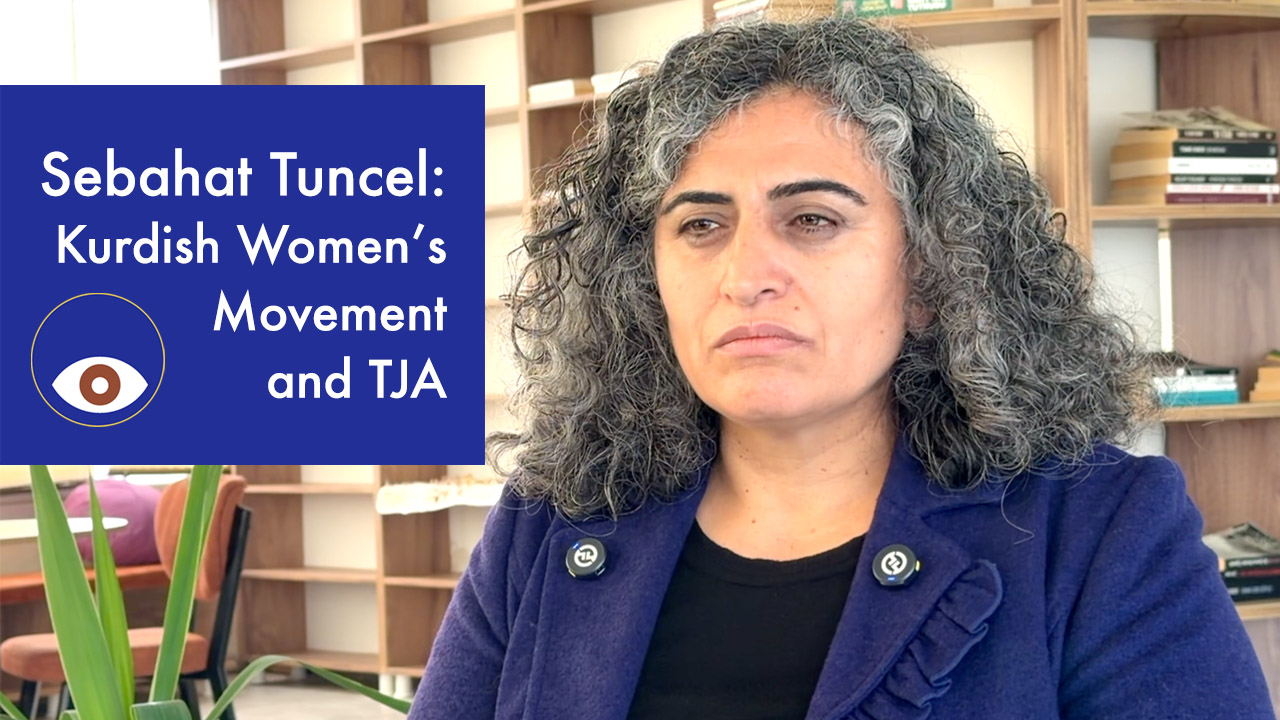
The Democratic Free Women’s Movement emerged as an umbrella organization connecting women from political parties, trade unions, municipalities, and independent associations. But the movement faced severe repression. During the anti-KCK operation beginning in 2009, the Turkish state arrested more than one hundred women activists. Some remained imprisoned for years.
During the 2013–15 peace process, women’s organizing evolved, eventually taking the form of Tevgera Jinên Azad (TJA), the Free Women’s Movement. The TJA brings together women’s associations, political activists, trade unionists, local government representatives, ecological movements, Peace Mothers, and families affected by imprisonment and political violence. Its guiding philosophy links democracy, ecology, and women’s liberation.
The TJA also works against domestic violence, sexual harassment, restrictions on reproductive rights, and the economic marginalization of women’s labor. It collaborates with Turkish feminist organizations to defend legal protections, including Law No. 6284, and opposes Türkiye's withdrawal from the Istanbul Convention.
Tuncel identifies the co-chair system, which establishes shared leadership between women and men, as a major achievement of Kurdish women’s organizing. She credits the movement with increasing women’s political representation and influencing other Turkish political parties.
Despite repeated arrests and organizational closures, Tuncel emphasizes the movement’s resilience and its ability to create new structures to continue its work.
LGBTQ+ Rights and Democratic Equality
Tuncel places the struggle for LGBTQ+ rights within the broader struggle for women’s liberation and democratic equality.
LGBTQ+ organizations participated in the founding of the HDP, and the peace process of the early 2010s created a relatively more open environment for their political activities.
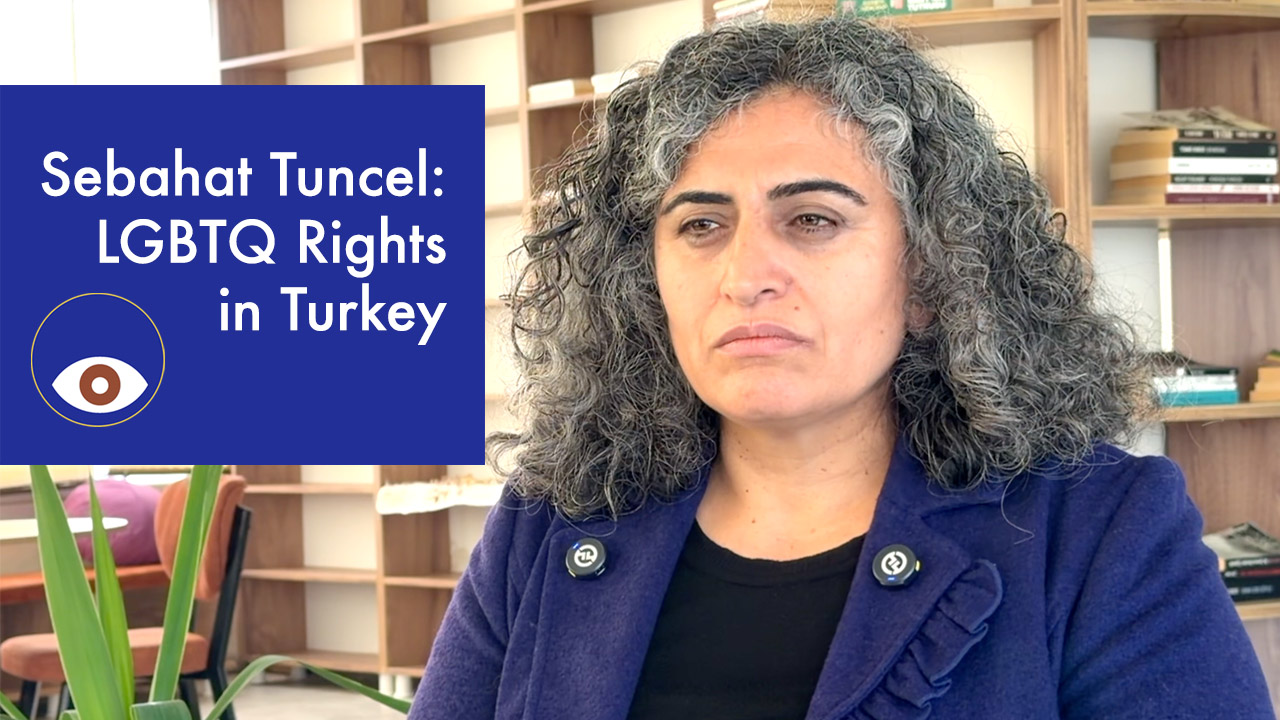
Since 2015, however, Tuncel argues that increasing authoritarianism, religious conservatism, nationalism, and patriarchal politics have made LGBTQ+ people more vulnerable to discrimination and hostility.
She acknowledges that disagreements and prejudices sometimes arise even within progressive political movements. Nevertheless, she insists that everyone must enjoy fundamental rights regardless of gender identity, ethnicity, or religion.
These include the right to life, freedom of association, and the ability to express one’s identity without fear.
Tuncel sees feminist organizing as essential to LGBTQ+ liberation. When women’s movements become stronger, they challenge patriarchal structures and create greater space for LGBTQ+ communities to organize.
For Tuncel, Kurdish liberation, women’s emancipation, and LGBTQ+ equality are interconnected struggles. She hopes that democratic transformation will ultimately allow all marginalized communities to live freely and equally.
Reader conversation
Comments0
Share your perspective. Thoughtful replies help our newsroom understand what matters to you.