
There is a village in Kashmir where the army bunker stands beside the graveyard. There is a village in Odisha where the forest begins where the state ends. There is a city in Turkey where speaking one’s mother tongue was once treated as a crime. These places are separated by thousands of kilometres, different histories, different religions, different languages. Yet they share a question that modern politics has never answered satisfactorily: How do people become free without becoming what once oppressed them?
For most of the 20th century, the answer seemed obvious. If a people were dominated, they needed a nation. If they were denied representation, they needed a state. If they were colonised, they needed a flag. The Kurds followed this road too.
And then, in one of the strangest ideological transformations of the modern era, part of the Kurdish movement turned around and walked in the opposite direction. Instead of asking how to build a nation-state, they began asking whether the nation-state itself was the problem.
The result was not merely a political theory. It became one of the most ambitious experiments in democratic self-government in contemporary history: the Kurdish freedom movement, the political thought of Abdullah Öcalan, and the revolution that emerged in Rojava, northern Syria. According to recent interpretations of Öcalan’s concept of “democratic integration”, the goal is not simply Kurdish inclusion within existing state structures, but the development of democratic self-organization that exists alongside and beyond them.
To many South Asians, this may sound distant and unfamiliar. It is not. In important ways, it is a conversation we have already been having.
The People Without a Country
The Kurds are often described as the world’s largest stateless nation. Around 30 to 40 million Kurds live primarily across Turkey, Syria, Iraq and Iran. Different states attempted, in different ways, to assimilate, suppress or marginalise Kurdish identity. Kurdish language, culture and political organization frequently became sites of conflict. #DilarDirik describes Kurdish experience as one shaped by overlapping forms of oppression: ethnic, political, economic and patriarchal.
For much of the 20th century, Kurdish politics looked familiar to anyone who studies anti-colonial movements. Independence was the horizon. A Kurdish state was the dream.
When the Kurdistan Workers Party, or PKK, emerged in the late 1970s under Öcalan’s leadership, it was largely Marxist-Leninist in orientation and sought national liberation through revolutionary struggle. Scholars tracing the PKK's evolution note that it initially resembled many 20th-century socialist and anti-colonial movements before undergoing a profound ideological transformation that began years before Öcalan’s imprisonment in 1999.
That transformation matters because it produced a question that should disturb everyone, from Delhi to Srinagar to Bhubaneswar: What if the oppressed become free only to recreate the institutions that once oppressed them?
The Nation-State and Its Shadow
South Asians understand nationalism intimately. Our histories are made of it. India inherited the anti-colonial dream of democratic self-rule. Pakistan emerged from another imagination of collective identity. Bangladesh from yet another. Yet our region also knows nationalism’s shadow.
We know borders that cut through memory. We know maps that divide families. We know communities whose languages survive despite official neglect. We know what happens when states demand sameness from societies that are fundamentally plural.
Kashmiris know this in one register. Adivasi communities know it in another. Tamils, Nagas, Baloch, Sindhis and countless others know their own versions. Öcalan’s mature political thought begins precisely here.
His argument, as outlined in recent discussions of democratic integration, is that freedom cannot be reduced to controlling a state. Real self-determination emerges from democratic self-expression, collective organization and communal political life. The nation-state, in his view, tends towards centralisation, homogenisation and hierarchy.
This is where Apoism, or the political current associated with Öcalan, makes its radical break. It does not simply ask who should govern the state. It asks why politics should revolve around the state in the first place. For South Asians raised on endless debates between nationalism and separatism, this can feel almost disorienting.
Apoism proposes a third possibility. Neither assimilation. Nor secession. But democratic autonomy.
The Most Unusual Revolution of the 21st Century
Ideas matter only when they survive contact with reality. In 2012, reality arrived. The Syrian civil war shattered old institutions. In the Kurdish-majority regions of northern Syria, local movements influenced by Öcalan’s thought began constructing new political structures. This process became known as the Rojava Revolution. Dilar describes it as an attempt to replace state institutions with councils, assemblies and autonomous self-governing structures rooted in democratic confederalism.
The word sounds intimidating. The idea is simple. Instead of concentrating power upwards, distribute it downwards. Neighbourhood assemblies. Women’s councils. Local self-government. Co-operative economics. Shared leadership. A network of democratic institutions linked together without aspiring to become another centralised nation-state.
This system became known as democratic confederalism. According to Dilar’s account, it seeks democracy through self-governance, communal organization and gender-equal representation rather than through state power alone. To South Asian ears, there is something surprisingly familiar here.
One hears echoes of village assemblies. One hears fragments of panchayat traditions. One hears Dr. B.R. Ambedkar’s insistence that democracy must become a social ethic and not merely a constitutional form. One hears Gandhi, though stripped of romantic village essentialism. One hears Bhagat Singh asking what freedom means after independence.
Yet Apoism is none of these. It is its own synthesis, emerging from Kurdish experience, while drawing from an unexpectedly wide intellectual universe that includes socialism, feminism, ecology and libertarian municipalist thought.
Why Women Stand at the Center
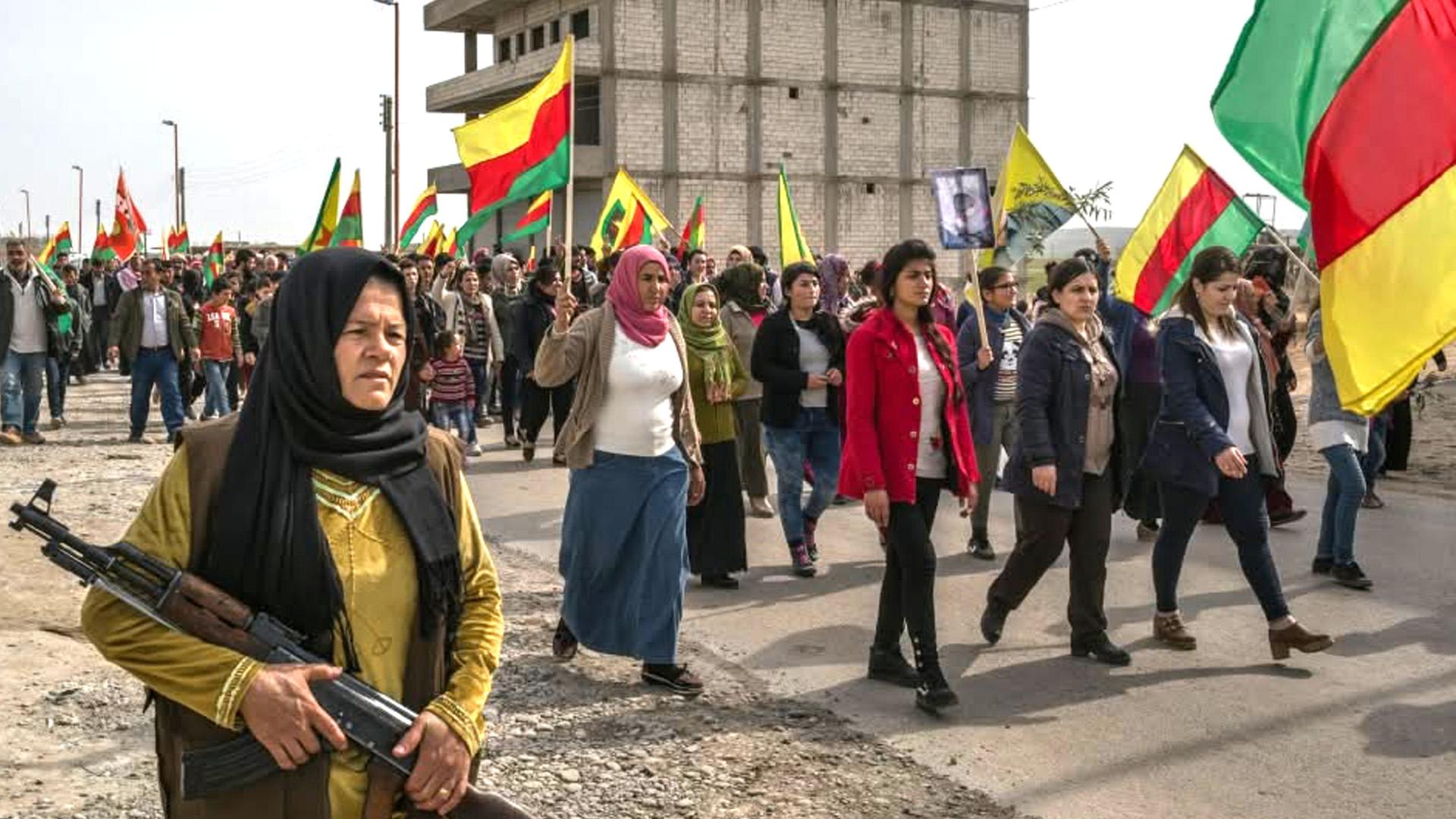
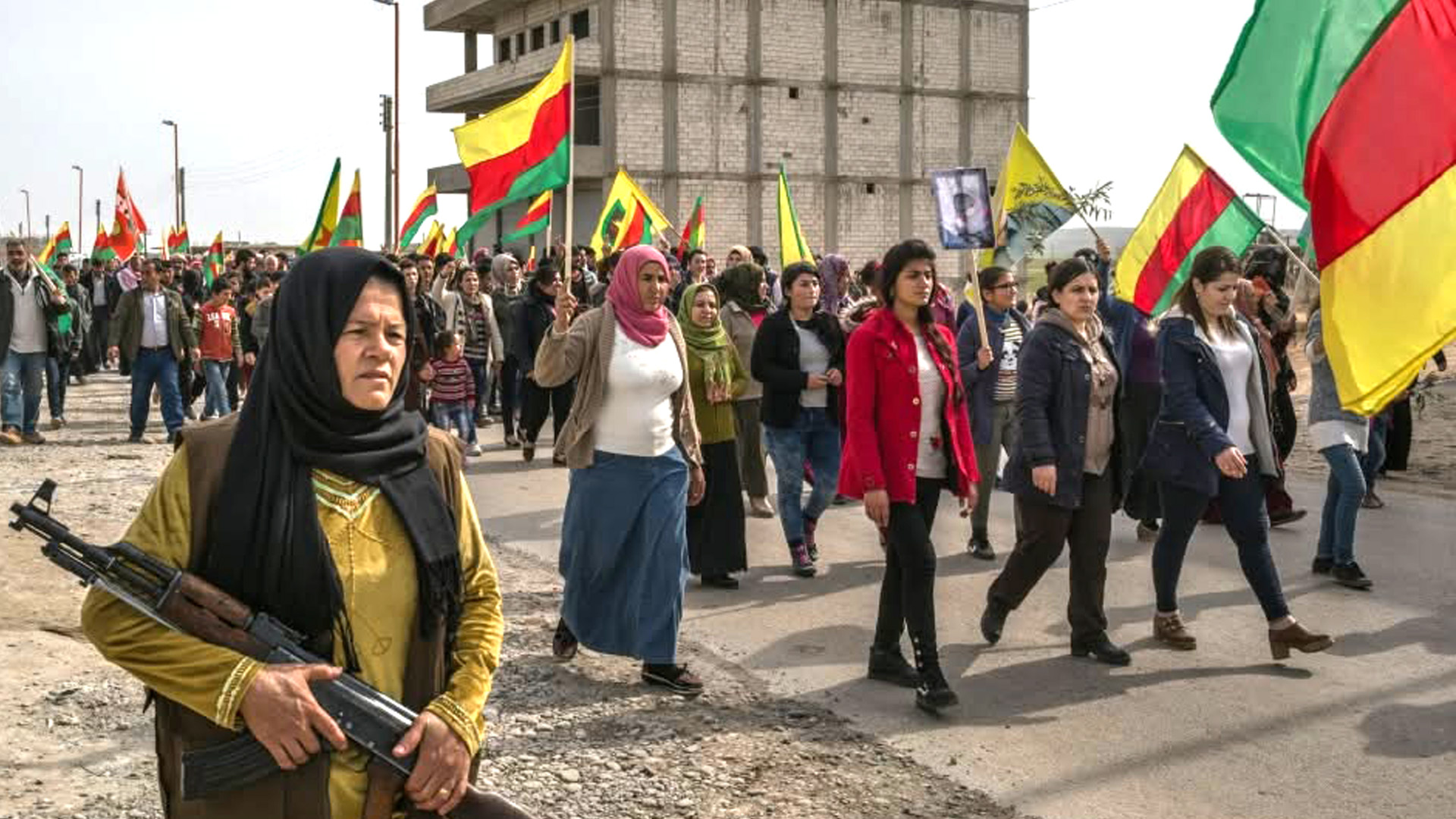
Many international observers first encountered the Kurdish movement through photographs. Women carrying rifles against ISIS. Women commanding military units. Women leading assemblies. But reducing this to symbolism misses the deeper story.
The Kurdish movement’s most original contribution may not be military at all. It may be its insistence that patriarchy is not a secondary issue. It is foundational. Both Öcalan’s political framework and the Kurdish women’s movement argue that liberation cannot happen while gender hierarchy remains intact. The movement institutionalised women’s autonomous organization, co-chair systems and gender-equal representation.
This is one reason Apoist thought resonates far beyond Kurdistan. It refuses the old revolutionary bargain. The bargain that says: first liberation, then women’s rights. The Kurdish women’s movement answered differently. Without women’s liberation, there is no liberation. For South Asia, where progressive movements have often reproduced patriarchal structures internally, this insight remains profoundly relevant.
Lessons for Kashmir
Kashmir is not Kurdistan. Any serious comparison must begin there. The histories differ. The geopolitics differ. The actors differ. Yet both share experiences of militarisation, contested sovereignty, and competing national projects.
What makes Apoist thought interesting in Kashmir is not because it offers a ready-made solution. It does not. Rather, it asks a deeper question. Can political imagination move beyond the binary of state control versus state separation? Can democratic self-organization become an end in itself? Can communities develop institutions capable of protecting culture, language, memory and pluralism regardless of constitutional arrangements?
These questions echo through contemporary debates across the Valley. The Kurdish movement does not answer them for Kashmir. It simply reminds Kashmiris that other political vocabularies are possible.
Lessons for Odisha
The connection may initially seem weaker. It is not. Odisha contains some of South Asia’s richest experiments in local self-organization, and some of its harshest disputes over land, extraction, and development. Across forested districts, questions return repeatedly: Who owns the land? Who decides its future? Who speaks for a community? Who benefits from development?
Öcalan’s critique of extractive modernity, and his emphasis on communal organization, ecology and local democracy, emerged from a different context, yet they speak to concerns that many indigenous and forest communities across South Asia would instantly recognize. He frames democratic self-organization as an alternative to both authoritarian state centralization and destructive economic extraction.
Odias need not agree with every Apoist argument to recognise its relevance. The question of democracy is not only who rules. It is where power lives.
A Revolution Against Certainty
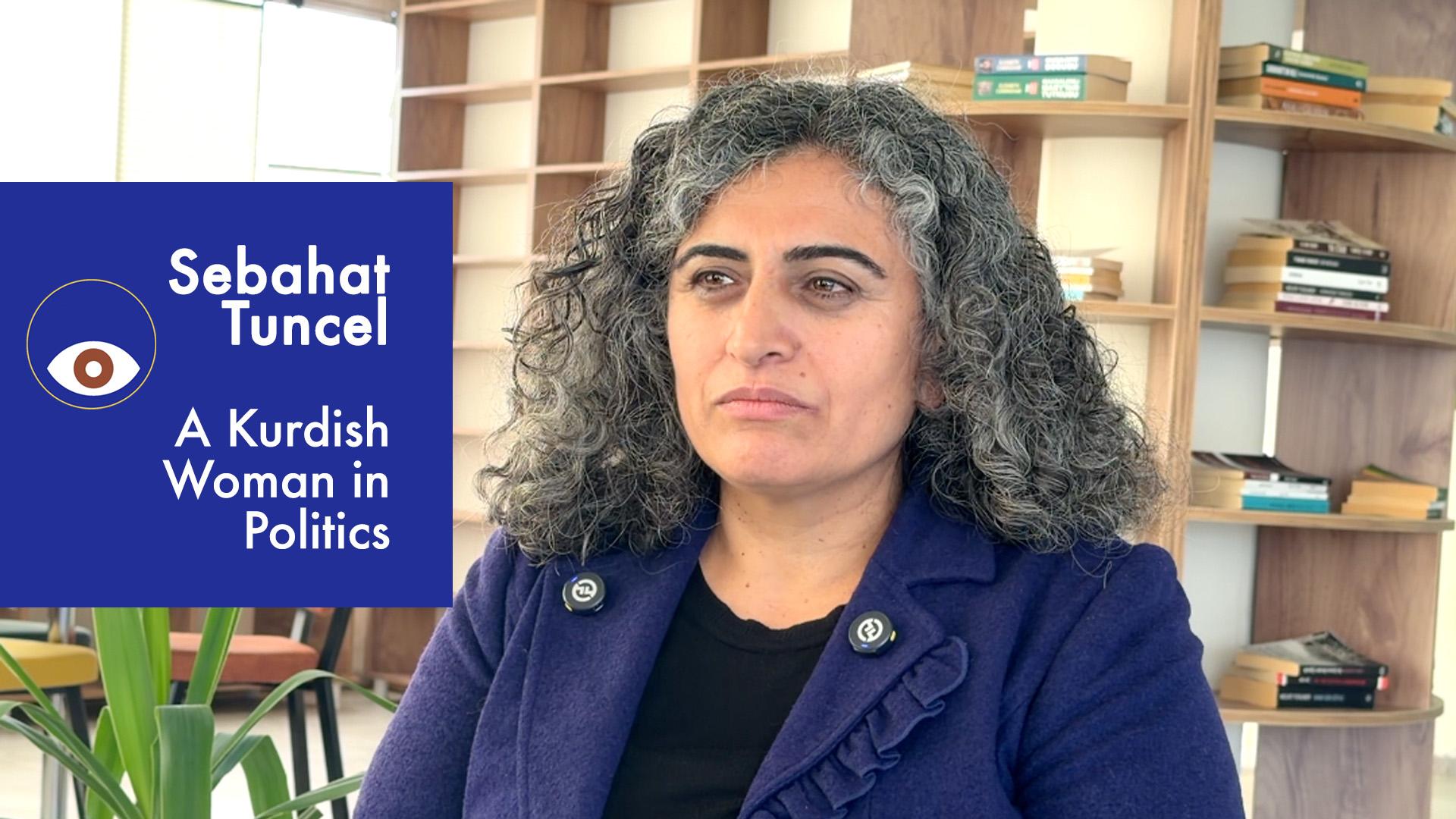
It would be tempting to end here with celebration. That would be dishonest. The Kurdish movement itself increasingly emphasises self-criticism. In a remarkable recent reflection, Dilar argues that supporters and scholars alike must confront contradictions, geopolitical compromises, and difficult questions surrounding power, intervention and representation. She insists that genuine liberation demands continuous critique, including of one’s own movement.
This matters. Because the most interesting thing about Apoism may not be its answers. It may be its method. The belief that liberation is a process of permanent questioning. A society questions power. A movement questions itself. An individual questions inherited assumptions.
Freedom becomes less a destination than a practice.
The View from South Asia
There is a tendency among young people to encounter foreign struggles as spectators. To treat Kurdistan as one more story scrolling past on a screen. But some stories travel because they carry questions.
The Kurdish freedom movement matters not because South Asians should imitate it. The conditions are different. History is different. The futures will be different too.
It matters because it reveals that politics need not remain trapped inside the categories we inherited from the 20th century. Nation. State. Sovereignty. These may not be the final words in humanity’s political vocabulary.
Across the mountains of Kurdistan, amid prisons, wars, communes, women’s assemblies and unfinished revolutions, another language is being attempted. It speaks of democracy not as a government but as a way of life; citizenship not as a legal status but as participation; identity not as a wall but as a starting point for solidarity. For a generation growing up in Odisha, Kashmir and across South Asia, facing ecological collapse, majoritarian nationalism, democratic exhaustion and widening inequality, that possibility alone is worth attention.
The Kurdish experiment may yet fail. Many revolutions do. But its most enduring contribution may already be secure. It reminds us that another future does not begin when a flag is raised over a capital. Sometimes it begins when ordinary people decide to govern themselves, together, before anyone grants them permission.
Note: The writing of this text was AI-assisted.
Reader conversation
Comments0
Share your perspective. Thoughtful replies help our newsroom understand what matters to you.