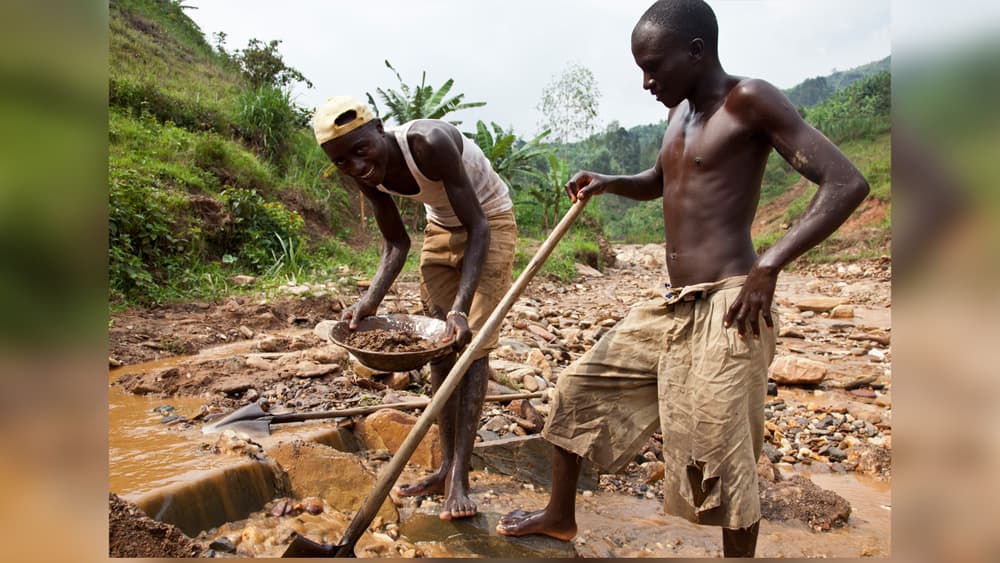

In every part of the globe since the Neolithic, most human beings have lived as peasants. But the advent of modernity, some three centuries ago, brought stresses to small farmers, beginning with Britain’s enclosure of farmland. As industrial capitalism concentrated wealth in cities, many peasants left the land and sought opportunities there. Karl Marx, writing in urban Britain, assumed that modernity would spread throughout the world and not only diminish the ranks of peasants but ultimately lead to their extinction as a class. In the last century, social theorists of all political tendencies considered the end of the peasantry to be inevitable. Agriculture, they believed, would be carried out on a large scale by the machinery of capitalism or communism. The very word peasant became an insult.
These assumptions have turned out to be wrong: the global peasantry has survived modernity. Today, the Oxford sociologist Maryam Aslany writes in Peasants, almost 42 percent of people, especially in Asia, Africa, and Latin America—the Global South—are small farmers, while peasant households make up around 25 percent of the world’s population. Far from being driven to extinction by modernity, she argues, peasants played a role in creating the modern world, and the modern world continues to depend on them as producers of basic commodities and custodians of sustainable lifeways.
If peasants have survived despite social theorists’ predictions, the twentieth century nonetheless did not go well for them. Communist states collectivized and resettled them, killing tens of millions in the process. The United States industrialized agriculture, replacing small farmers with agribusiness. Civil wars in Africa and South Asia killed many more. In Latin America and elsewhere, peasants were targeted by superpower-backed counterinsurgency campaigns. And since the end of the Cold War, rural communities have borne the brunt of horrific ethnic struggles and resource wars in Sudan, Rwanda, and Congo.
While these conflicts are well known, peasants themselves remain largely absent from public consciousness. Aslany sets out to remedy this absence, giving us a framework for thinking about peasants as a vital social group and restoring them to the public conversation. For four years she journeyed through Asia, Africa, and Latin America and embedded herself with peasant families, sharing and witnessing their daily lives and speaking with them at length. They are growers of sugarcane, rice, coca, and cacao. Peasants, she concludes, are in crisis today because they have been pushed to their limits by a whole range of forces that are destroying the very conditions of their existence.
For one thing, peasants continue to endure physical violence as primary victims of land conflicts and battles over resources. As farming comes under stress, some peasants join religious militias such as the Taliban, Islamic State, Boko Haram, and Al Shabaab, which in turn kill or displace peasants in Afghanistan and Pakistan, Iraq and Syria, and Somalia. The total peasant death toll since 1945, she says, runs to the tens of millions: more than any nationality or ethnic group, peasants have been the main victims of such violence.
Another source of hardship for peasants is the lack of state support. Many states with large peasant populations fail to invest adequately in agriculture—in soil, water, and improved crops. This forces peasants who cannot innovate on their own to live with declining yields. Instead, states grant concessions and accommodations to global financial interests, in effect selling small farmers out to big business.
Global financial systems target the global peasantry in their own ways. All four of these basic commodities—sugarcane, rice, coca, and cacao—are cultivated by small farmers and then absorbed into commercial networks dominated by corporations or cartels. These systems force small farmers to absorb the costs of production while relinquishing claims to the profits. As a result, peasants must adopt subsistence lifestyles in order to survive, while carrying huge debts, often at high interest.
Corporations also force small farmers to use corporate seeds, pesticides, and herbicides, which damage producers’ health. A recent study by the Pesticide Action Network found that worldwide, pesticides poison almost half of small farmers and agricultural workers every year, mostly in South Asia, Southeast Asia, and East Africa.
The cumulative effect of these burdens is that peasants continue to leave the land. Most notably, China has been able to absorb hundreds of millions of peasants into its factories. But in other parts of Asia, as well as in Africa and Latin America, industry cannot provide enough jobs for peasants forced off the land. Well over a billion people in those regions, no longer supported by smallholder agriculture, are unable to find stable industrial or service employment. They then fall into abject poverty, or into criminality or militancy, threatening fragile social and political systems.
When peasants give up their land, the effects are profound. Peasants have endured as a class because they have been able to keep land fertile and productive for generations. But when they leave the land, their departure destabilizes food systems and supply chains and deepens political conflict. It also rips the tissue connecting humanity to our environment, accelerating ecological breakdown.
The peasant family, Aslany writes, “is organized around the enduring fertility of a particular piece of land: it must sustain soils, water systems, biodiversity, and diverse farming landscapes. Peasants therefore act as custodians of natural systems and form a crucial buffer against ecological breakdown. The fact that a substantial proportion of the world’s cultivable land is controlled by peasants protects us enormously against the final exhaustion of natural systems. ‘Sustainability’ … is the principle without which peasant life breaks down. Peasant societies have therefore built an entire ethical system around it—and, in today’s unsustainable world, they offer an essential corrective.”
How can we end the war against peasants? Above all, states must give priority to peasant populations rather than to financial interests, let alone ethnic and religious extremists. Peasants’ sustainable lifeways require ironclad protection if they are to continue to exist, especially from the downward pressure applied by powerful buyers. Peasants need protection for their land, and they need access to credit.
Aslany says her aim is “to restore to the countryside the visibility it demands. And to show that the future of small farmers is the future of us all.” In this she succeeds admirably. Her study of peasants is, in fact, an outstanding argument for ecological preservation and should be required reading not only for those who study geopolitics but for environmentalists as well.