

An unlikely set of coincidences placed a Brazilian couple, celebrating their wedding anniversary, right in the heart of Buenos Aires during the vibrant and chaotic week of the 2026 FIFA World Cup final. Their experiences during those days went far beyond romance, tourism, or the football (soccer) festivities: they offered a snapshot of a deeply divided nation. Amid the pulse of the streets and the roar of the fans, the avenues of Buenos Aires revealed the painful transition of a country that was pursuing macroeconomic stability and fiscal balance, yet at the grassroots level was bleeding. In shop windows, in people's eyes, and in casual conversations, one could see the immediate impact of Javier Milei's harsh economic policies, which promised a prosperous future at the expense of the present: frozen wages and pensions. The couple's celebration thus became a deep immersion into the misadventures of an Argentina that was trying to learn once again how to dance to the tune being played.
Many Brazilians consider Buenos Aires to be the Paris of the Tropics, with its classical architecture of unmistakably European flair, its wide tree-lined avenues, its monumental squares, and its iconic palaces. That distinctive urban landscape, experienced in the bitter cold of June and July, amid with wines, tango, and the Spanish language (which, despite its own musicality and particularities, is relatively easy for Brazilian Portuguese speakers to understand), beckons with an irresistible invitation to romance.
A well-developed public transportation network, with subway lines (the Subte) connected to metropolitan bus corridors (Metrobús), makes it easy to travel across the capital at affordable fares. Another economic factor cannot be overlooked: for some time now, the exchange rate between the Brazilian real and the Argentine peso has made Argentina an attractive destination for Brazilian tourists. It is no coincidence that couples, families, and friend groups have been organizing trips, purchasing travel packages, and otherwise making plans for that long-dreamed-of international getaway. My wife and I belong to the last group. After twenty-one years of marriage and twenty-five years together, we pooled our savings and decided to give ourselves that trip as a gift.
But we could never have imagined that the same economic policies that made our trip affordable were imposing on the Argentine population a reality far removed from romance and enchantment. Javier Milei’s economic program, broadly described as deregulation, consists of a wide-ranging set of measures aimed at reducing state intervention in the economy. Its main initiatives include eliminating regulatory restrictions, relaxing certain labor regulations, reducing or withdrawing subsidies and social benefits, curbing public investment, halting public works, revising price-control policies, opening economic sectors to private enterprise, and even privatizing state-owned companies. A substantial part of this agenda was implemented through presidential decrees, although other measures were passed by the National Congress amid intense political and institutional disputes. To be sure, some sectors of the Argentine economy, particularly energy, mining, and agribusiness, have posted favorable export results. But this performance has not translated into domestic improvements—on the contrary, manufacturing, retail, and construction have experienced a downturn. The sharp curbs on public spending, combined with the loss of purchasing power among wage earners and pensioners and cuts to certain social benefits, have weakened household consumption.
A greater openness to imports has also had negative consequences for domestic production. in an environment of weakened domestic demand, Argentine companies in several sectors have struggled to compete with foreign goods. The result has been a troubling combination of business closures, declining productive activity, and rising poverty and unemployment. In the streets, in shops, and in everyday conversations, we could sense the effects of an economy that was seeking fiscal balance and a restoration of market confidence but was still imposing substantial social costs on its population. Unsurprisingly, this agenda has faced strong resistance from workers, retirees, trade unions, and social movements. The rising cost of living, difficulties in accessing essential goods and services, unemployment, and the expansion of informal work are all fueling popular discontent. For visiting Brazilians, witnessing this reality was a source of sadness and concern for our Argentine hermanos.
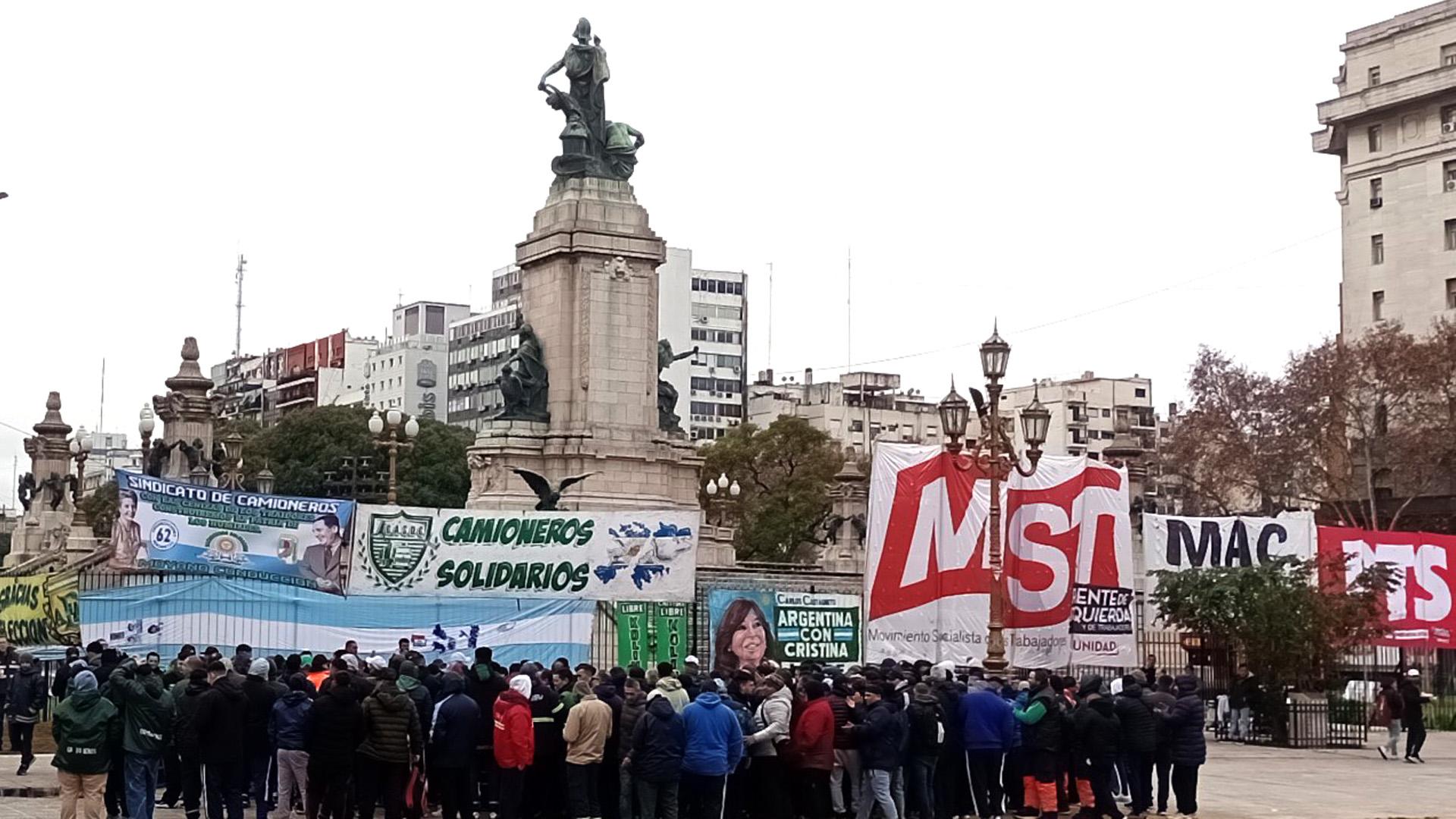
Protests have become part of the capital’s political landscape. Every week diverse sectors of society take to the streets, avenues, and public squares, particularly around the National Congress, to protest the government’s economic measures and to show solidarity with pensioners, many of whose monthly checks do not last until the end of the month. These were not merely figures, charts, or macroeconomic indicators: we saw people demanding rights, dignity, and the minimum conditions necessary to survive. We witnessed a demonstration that passed along Avenida de Mayo, where we were staying near Plaza de Mayo, led by a banner at the front that read: “The streets are no place to live or to die.” It was one of several such demonstrations that we observed.
Brazilians and Argentines share an almost unconditional passion for football. The fact that the two countries have given the world two of the greatest icons in the history of the sport, Pelé and Maradona, fuels a rivalry that extends beyond the pitch and forms part of the popular imagination in both nations. Perhaps this is why many Brazilians have come to believe that Argentines don’t particularly like us.
But from the moment our plane touched down in Buenos Aires, my wife and I began to realize that reality was quite different from that impression. The people we spoke with were exceptionally kind, welcoming, and helpful. Whenever we needed information, people were willing to lend a hand. Something else caught our attention: Argentines seemed to know Brazil remarkably well, not only its economic, geographical, and cultural features but also details we would hardly have expected to come up in casual conversations. They knew more than just our major cities. When we mentioned that we were from Minas Gerais, some even named towns in the interior of our state, such as Ouro Preto, São João del-Rei, Tiradentes, and Governador Valadares. That genuinely surprised us.
In fact, not only did Argentines seem unexpectedly knowledgeable about Brazil—they seemed to know our nationality, as if it were stamped on our foreheads. We had only to walk down a street for random people to greet us with “Long live Brazil!”, “Welcome!” or simply “Brazil!” in that unmistakable Argentine accent. Here’s another example. My wife and I visited the San Telmo Market, one of Buenos Aires’s must-see attractions, especially for lovers of good food and wine. At one point, as I stood waiting for my wife, the owner of a restaurant approached me, introduced himself as Leonardo, and asked me if I was Brazilian. I said yes and added that I was from Minas Gerais. Leonardo launched into a discourse about his fondness for Brazil, especially our music. He mentioned samba and said he was also a big fan of pop rock. Astonishingly, he even named bands from Minas Gerais, like Skank and Sepultura.
I thought, Wow! This man really knows the culture of Minas Gerais! Not wishing to seem impolite, I began returning the compliments, talking about my admiration for Argentine cuisine, its wines, and its music, especially tango.
Leonardo seemed genuinely interested and asked, “Really? What kind of tango do you like best?”
At that moment, I realized I had ventured into unfamiliar territory. I did not even know there were different styles of tango! I thought, I just missed a perfect opportunity to keep my mouth shut! I couldn’t possibly respond in kind to someone who had just demonstrated such impressive knowledge of Brazilian music. I tried to buy myself a few seconds, ransacking my mind for some tidbit of information to share, lest I expose my complete ignorance of the subject.
Just then, my wife strode over to us and unknowingly came to my rescue. I introduced her to Leonardo, remarking enthusiastically that he knew a great deal about Brazil. She was delighted, we exchanged a few more words, and then we said our goodbyes.
But I still had to salvage my musical honor. Before we walked off, I turned to Leonardo and, in a last-ditch effort to muster some whatever musical knowledge, said: “I really like Carlos Gardel’s tangos!” He smiled, pleased, thanked me, and we parted.
My wife and I continued our stroll through the San Telmo neighborhood. And at least during that encounter, the rivalry between Brazilians and Argentines seemed to have no place. Football might divide opinions, but music, curiosity, and kindness had brought us together.
July 19, 2026. I will never forget that Sunday afternoon. The match was scheduled to kick off at four p.m. in Buenos Aires, corresponding to three p.m. in New York, where the final was to be played. The World Cup had been jointly hosted by the United States, Canada, and Mexico, and Argentina was set to face Spain in an unprecedented final.
That Sunday had dawned cold and rainy, with a persistent drizzle over the Argentine capital. But the bad weather seemed unlikely to dampen the fans’ enthusiasm. In Caminito, Palermo, Recoleta, La Boca, and Puerto Madero, crowds gathered in front of giant screens and televisions set up in bars and even along the sidewalks, ready to watch the match.
Where would my wife and I watch? We decided to return to San Telmo Market since it was a covered space. Many others, it turned out, made the same calculation—fhe market was absolutely packed, and finding a seat was nearly impossible. The huge screen in its central area rivited everyone's attention. We managed to find a place among hundreds of Argentine supporters, watching the preparations for kickoff, and settle din.
The faces around me reflected the intensity of the moment. Eyes were shining, expressions revealed anxiety and hope, and every gesture seemed to carry the expectations of an entire nation. In that atmosphere, football was no longer just a sport. It was identity, collective memory, belonging, and above all, hope. “Vamos, vamos, Argentina, vamos, vamos, país” (Let’s go, Argentina. Let’s go, country) echoed from every direction.
A certain historical and political dimension made this final particularly symbolic. Argentina and Spain are nations whose relationship has been shaped by colonialism, and here they were once again facing each other, the former South American colony and its former European colonial power.
Curiously, the political roles, viewed through the lens of contemporary ideology, seemed reversed. On one side was Spain, governed by Pedro Sánchez, leader of the Spanish Socialist Workers’ Party, a social-democratic, center-left party often regarded as a progressive reference point in European politics. His government, however, was facing intense domestic polarization and political disputes on the eve of the general elections scheduled for November 2026. On the other side was Javier Milei’s Argentina. A representative of the radical libertarian right and leader of the La Libertad Avanza movement, Milei was pursuing an economic and political agenda that was profoundly changing the country and giving rise to the intense public protests we had been witnessing.
The World Cup final did not end the way our Argentine hermanos had dreamed. Spain won 1–0 in extra time and claimed the title. But what surprised us was the way the Argentines responded to defeat. Among those around us, anger and sadness were not the prevailing emotions. Quite the opposite: people expressed pride in their team’s campaign and even in finishing as runners-up. That night fans filled the city’s squares and avenues, celebrating their team’s journey with jubilation.
That attitude made a strong impression on my wife and me, making us think Brazil could learn from our neighbor to the south. Reaching a World Cup final, or any other major international sporting competition, is an extraordinary achievement in its own right, worthy of recognition and celebration. Unfortunately, in our country, the prevailing sense is that only first place matters. This results-driven mindset can place unnecessary pressure on athletes and turn great achievements into apparent failures. That night the Argentines of Buenos Aires taught us the importance of recognizing the journey, even when the trophy went to the opposing team.
Speaking of cultural differences and similarities, another impression we formed was that Argentines, or at least the porteños we met, seemed somewhat more reserved than Brazilians. That, however, did not make them any less helpful. On the contrary, we repeatedly encountered acts of kindness and a genuine willingness to lend a hand. The day after the World Cup final, my wife and I were in the subway, trying to figure out where to get off to reach the El Ateneo Grand Splendid bookstore. Housed in a former theater, it’s considered one of the most beautiful bookstores in the world.
We asked a fellow passenger, a young university student, if he knew which station we should get off at to reach the bookstore. He was not sure either. He could simply have wished us luck and continued on his way, which would have been perfectly understandable. But he did something we will never forget: at the next station, he got off with us, sought out police officers and subway staff, asked for directions, and made sure we had understood them correctly. Only then did he resume his own journey. We were deeply moved. That young man went out of his way to make sure that two Brazilian tourists would not get lost in a foreign city. It was a simple gesture, but one full of meaning.
Our days in Buenos Aires were filled with culinary discoveries, as we sampled traditional medialunas, small crescent-shaped sweet rolls; the delicious choripán (sausage sandwich); the famous bifes de chorizo served with papas españolas; and many other delights of Argentine cuisine. We met many people, heard their stories, and had some preconceived ideas challenged. Contrary to what conventional wisdom in Brazil might suggest about Buenos Aires, our experience there was marked by the kindness, warmth, and honesty of the people we met. Argentines we met showed tremendous affection for Brazil and its culture. Naturally, a week of interactions is no basis for making an absolute judgment about an entire people. But the porteños we met welcomed us with a generosity that will remain in our memories forever.
We returned to Brazil convinced that the ties that bind Brazilians and Argentines, and South American peoples more broadly, are far deeper and more significant than the differences that sometimes drive us apart. A genuinely integrated, mutually supportive, and cooperative community of South American nations would do more than strengthen the region economically and politically. It could also make a decisive contribution to multilateralism and a more balanced international order, one in which the Global South has a voice, autonomy, and a meaningful role in decisions affecting the future of humanity.
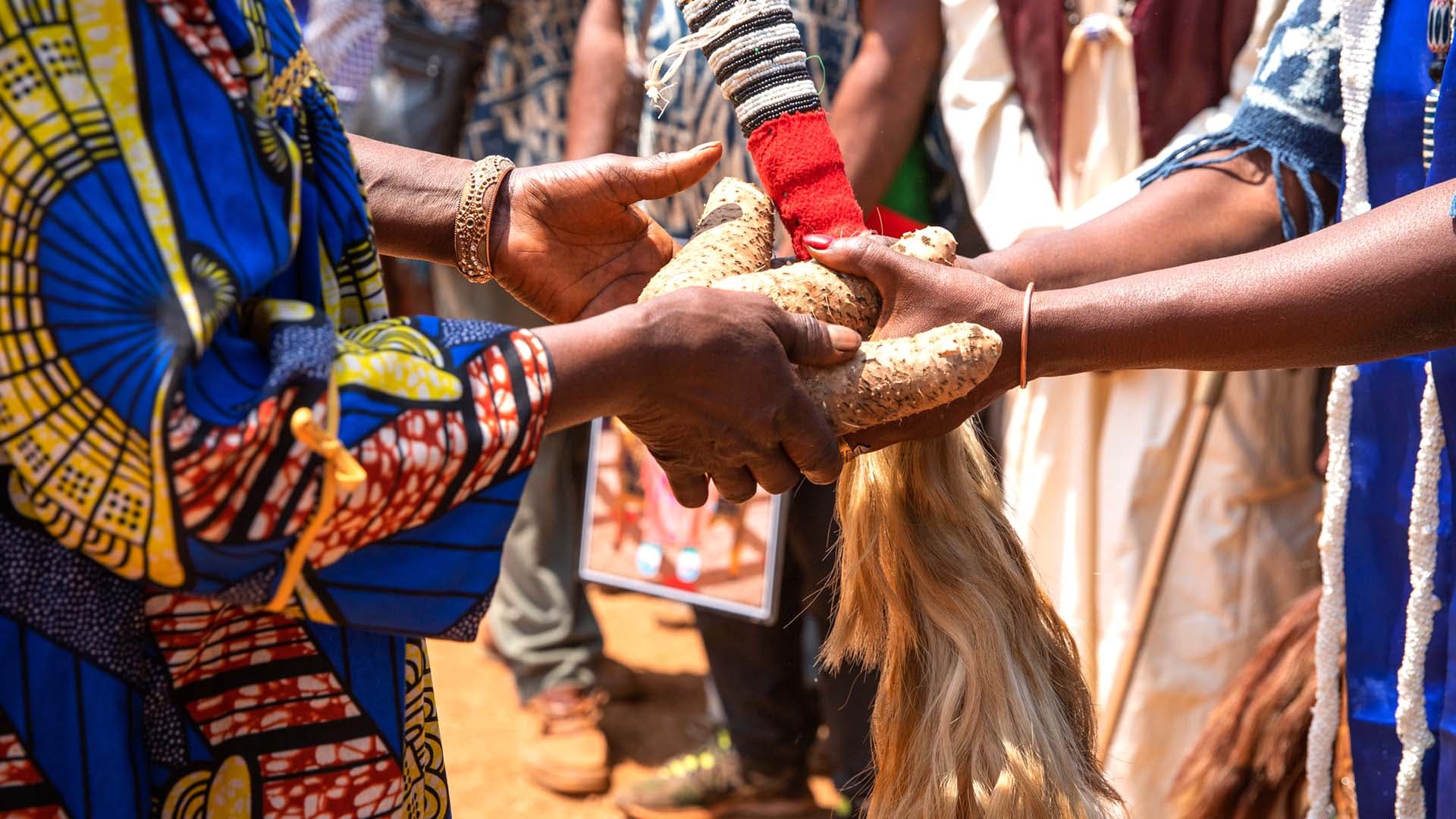
This is where Ubuntu philosophy holds a special place in our reflections. One of its fundamental lessons is that each person's existence and well-being are deeply connected to those of their community. We are not isolated individuals but human beings whose humanity is realized through our relationships with others. If we extend this principle to international relations, we can understand that our community does not end at national borders. Our community is South America. Our community is also the entire Global South.
The destinies of Global South countries are intrinsically connected. The crises of one neighbor reverberate across the others; but the achievements of one can also open new paths for everyone. Brazil can have no genuine regional prosperity if it comes at the expense of the vulnerable countries around us. We must replace predatory competition with cooperation, distrust with solidarity, and historical rivalries with shared development projects. We sincerely hope our Argentine hermanos will once again find a path toward prosperity, social justice, and dignity. May they once again dance, sing, and smile with the intensity we witnessed in the streets of Buenos Aires. May economic stability never come at the cost of their people's suffering, and may development once again represent a shared hope rather than a privilege reserved for a few.
We deeply wish that Argentina will find a path on which economic progress and social justice can move forward together. After all, as Ubuntu teaches us, I am because we are. And if we are part of one human community, then the destiny of our hermanos is also our concern. May the flame of Mercosur burn brightly once more. May our peoples never forget that, by walking together, we can go farther, and that united, we are much, much stronger.
Ubuntu!
Ouro Branco, Minas Gerais, Brazil,
November 14, 2026.
Dr. Eduardo Viana is a Pan-Africanist, professor, researcher and lawyer.

Reader conversation
Comments0
Share your perspective. Thoughtful replies help our newsroom understand what matters to you.