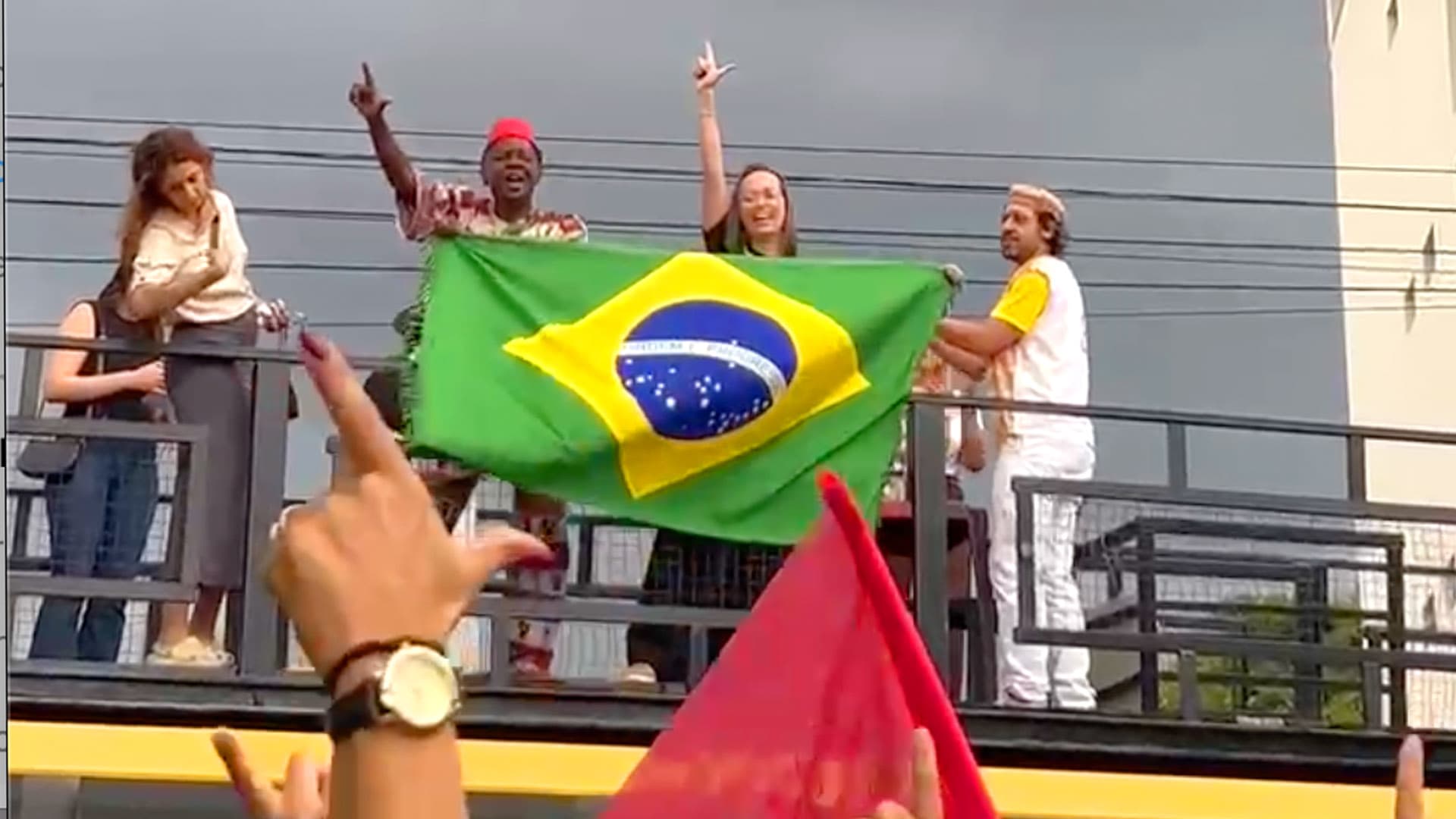

On October 25, 2026, in the second round of Brazil’s presidential election, the Brazilian people reelected Luiz Inácio Lula da Silva of the Workers’ Party for a fourth term. Of the ten presidential elections held in Brazil since the end of the military dictatorship in 1985, Lula has run in seven and won four. It’s an unprecedented and historic achievement.
In Brazilian presidential elections, the law requires candidates to obtain an absolute majority of valid votes to win in the first round. Since the country has numerous political parties, votes tend to be distributed among several candidates. So when no candidate secures more than 50 percent of the valid votes, a runoff is held between the two candidates who received the most votes, with the aim of securing a genuine electoral majority and thereby strengthening democratic legitimacy.
The first round of the 2026 presidential election took place on October 4. According to official data from the Superior Electoral Court, Flávio Bolsonaro received 47.03 percent of the valid votes, excluding blank and null ballots, totaling more than 56 million. Lula, in turn, secured 45.16 percent, equivalent to nearly 54 million.
Brazil frequently holds runoff elections for the presidency. Of the ten presidential contests held since the end of the military dictatorship in 1985, eight were decided in a second round. Until last Sunday, however, no candidate who had finished the first round in second place had ever managed to reverse the outcome and win the election. But one phrase has become synonymous with Luiz Inácio Lula da Silva: Never before in the history of this country... In this case, it could be completed as follows: “Never before in the history of this country had a president managed to turn the tables in a runoff election.” Never before. Lula was the first.
The story of this northeastern Brazilian, born into extreme poverty and turning eighty-one on the day of this writing is truly inspiring. Luiz Inácio Lula da Silva was born on October 27, 1945, in Garanhuns, in the state of Pernambuco. At the age of seven, fleeing drought, hunger, and poverty, he traveled with his mother and siblings for more than ten days in an open-backed truck known in Brazil as a pau de arara, eventually reaching the state of São Paulo. He worked as a shoe shiner, a street vendor, and a metalworker, specializing as a lathe operator.
During the 1970s, Lula emerged as a prominent labor leader, serving as president of the Metalworkers’ Union of São Bernardo do Campo and Diadema and leading the major strikes that swept the ABC industrial region of São Paulo between 1978 and 1980. On February 10, 1980, he founded the Workers’ Party. In 1986 he was elected to Brazil’s Constituent National Assembly, serving as a federal deputy from 1987 to 1991. He was elected president for the first time in 2002, then again in 2006 and 2022.
Lula’s first three administrations marked by the creation and expansion of major social programs, such as Bolsa Família and Fome Zero (Zero Hunger). He made significant progress in the fight against hunger, allowing Brazil to exit the Hunger Map on two occasions. He provided economic stability, created incentives for industry and agriculture, and increased the national minimum wage.
In April 2018, as part of Operation Car Wash (Operação Lava Jato), Lula was arrested on charges of corruption, convicted, and sentenced to prison in closed detention in Curitiba. But in 2021 the Supreme Federal Court, Brazil’s highest judicial authority, found that the court that convicted him had lacked jurisdiction and that the presiding judge had been biased. It annulled Lula’s convictions (he had spent 580 days in prison) and restored his political rights. But In 2022, he won that year’s presidential election, beginning his third term.
As we have seen, in the first round of the 2026 election, no party achieved a majority, triggering a runoff. On Sunday, October 25, Lula achieved the remarkable milestone of receiving more than 64 million votes (51.79 percent of the valid votes), defeating his opponent, who received more than 59 million votes (48.21 percent), according to official data from Brazil’s Superior Electoral Court.
Today people around the world are asking: How is it possible not only to turn the tide in a runoff election but also to gain more than 10 million additional votes in less than a month? The explanation is complex, but several factors were at play.
A sense of shock. Before the first round, many of us believed that Lula’s reelection was secure. The political project of Lula’s opponent, Flávio Bolsonaro, seemed so absurd that many believed he had no real chance of winning. When the results of the first round revealed his remarkably high vote count, an alarm bell went off among Brazilian citizens: we realized that our democracy was under threat, and we were gripped by deep fear.
The opponent’s own words. Bolsonaro, Lula’s opponent, displayed what we considered openly authoritarian characteristics. He explicitly spoke of changing the constitution, but it was unclear whether he intended to change it through the legitimate process of constitutional amendment or would seek to alter the very structure of the constitutional order. Bolsonaro’s ambiguous proposal thus gave Lula’s supporters, such as myself, a tool to challenge our political opponents, and it also enabled us to explain to undecided voters the serious risks that his proposal would pose to democracy.
The opponent’s actions. Bolsonaro supporters circulated online images of children holding guns, as if this were something desirable. In response, we shared images of children holding a book, and not just any book, but Brazil’s 1988 Constitution. That constitution, together with its subsequent amendments, laid the foundation for our current democratic state governed by the rule of law. Our message was clear: education instead of weapons, and the defense of democracy instead of violence. This strategy resonated in a society where there is significant resistance to expanding civilian access to firearms.
A second image sparked further deep outrage: it showed a Caucasian (white) man declaring that Lula would be imprisoned again and holding a chain. At the other end of the chain stood an Afro-Brazilian man. The scene disturbingly evoked enslavement and racial subjugation. To us, the symbolic message was unmistakable: imprisoning Lula would metaphorically mean chaining the Afro-Brazilian people once again and perpetuating relationships of exploitation, low wages, and subordination. It was an image and a prospect we could not passively accept.
Finally, it is important to emphasize here that many Bolsonaro supporters routinely displayed Nazi symbols.
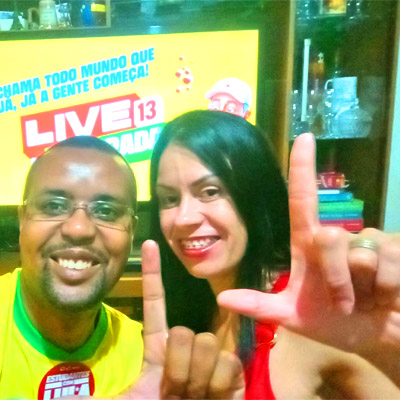
Social media mobilization. In the run-up to the 2026 election, the political content of social media posts seemed imbalanced, as statements and demonstrations in support of Bolsonaro seemed to receive greater exposure than those in support of Lula. That confused some undecided voters. In truth, many of us until recently had little understanding of how social media algorithms work. But with the social media imbalance, we began volunteering our free time to share images over social media, disseminate information, and explain respectfully why we believed Lula’s political project was closer to the nation we wanted to build.
The federal deputy André Janones played a central role in digital mobilization during the second round. He created a WhatsApp channel called “Lula’s Army” (Exército do Lula) that grew meteorically, surging from just 60,000 participants during the first round to more than 11 million in less than a month. I was a member of Lula’s Army from the beginning, and can testify that Janones’s guidance helped participants better understand how the platforms worked and increased the reach of their posts, overcoming algorithmic barriers. We were able to demonstrate that the mobilization in support of Lula was far broader than the initial visibility of our social media efforts, and questionable statistical polls, might have suggested.
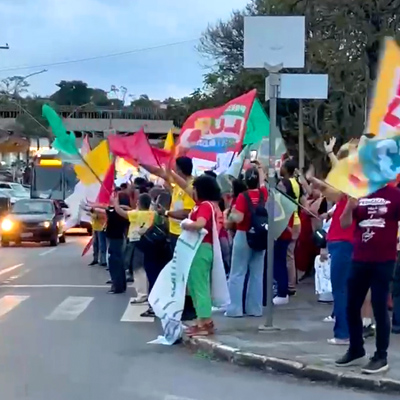
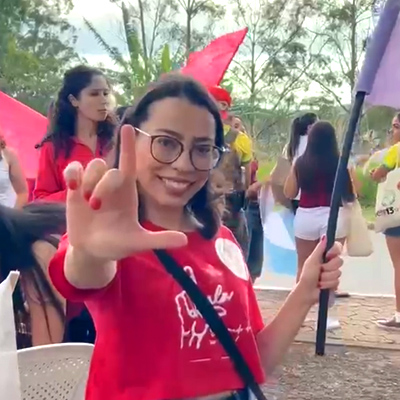
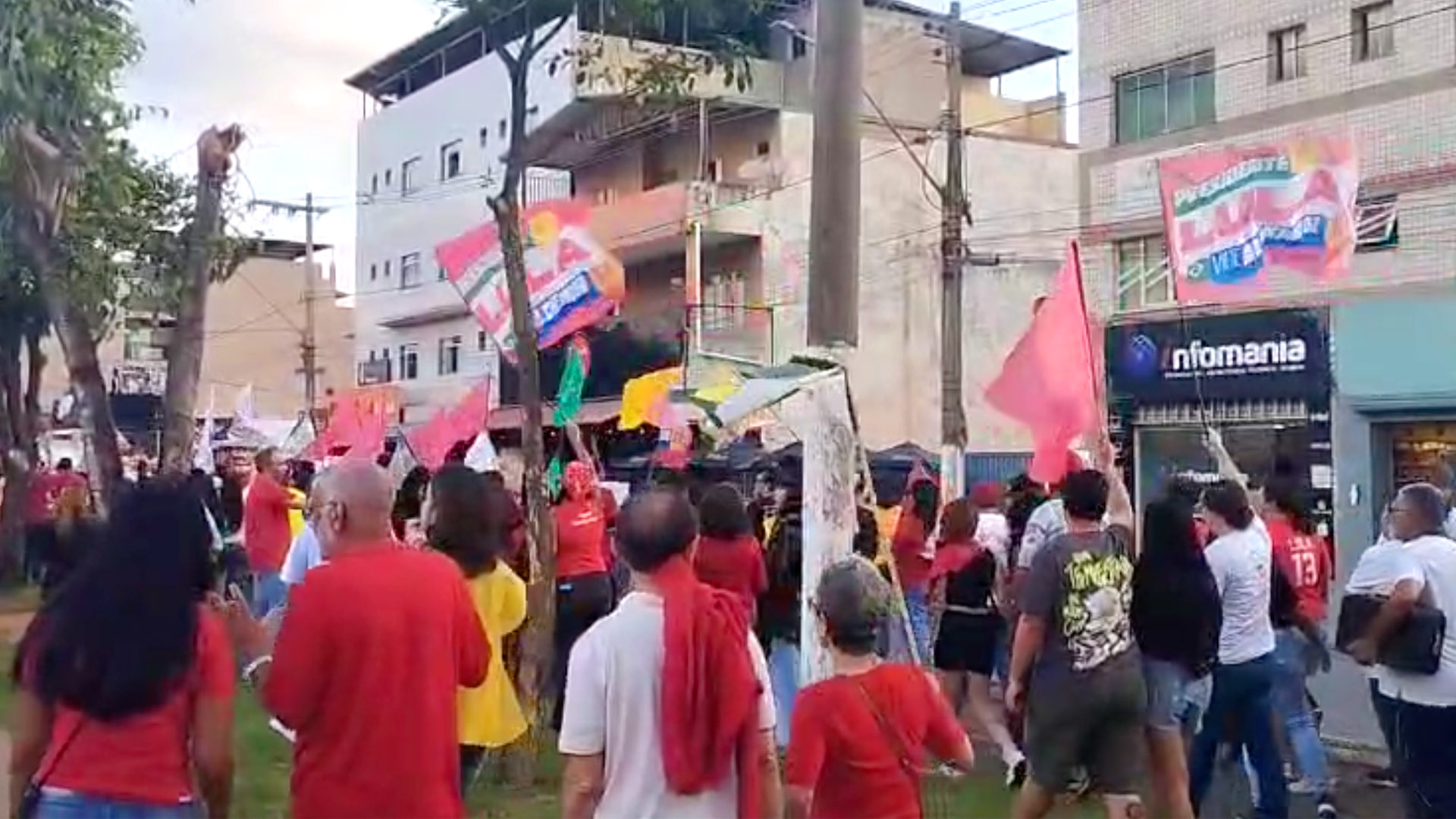
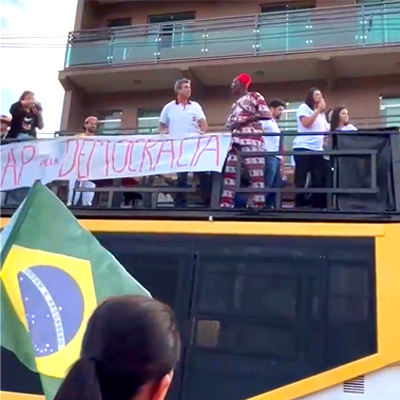
Peaceful and deeply cultural demonstrations. We organized demonstrations that brought out millions of people in Rio de Janeiro (Rocinha and Copacabana), São Paulo (Paulista Avenue and Largo da Batata) ,and Belo Horizonte (Praça Sete and Praça Raul Soares). Hundreds of other demonstrations took place throughout the country in cities large and small.
We also organized cultural events in defense of Brazilian democracy, debates, lectures, and cultural performances that explained the stakes in the reelection: democracy versus authoritarianism; dignified work versus exploitation; science, culture, and education versus religious fanaticism and extremism. We promoted these events over social media. Our strategy was to foster dialogue. Millions of people who had cast blank or invalid ballots in the first round, or who had not even gone to the polls, decided to participate in the second round and support our political project. The mobilization of university students, technical college students, workers, and older adults, including those with limited mobility, was essential. It was truly extraordinary. What we experienced in Brazil in recent days will undoubtedly be studied for years to come, particularly in the fields of political science, constitutional law, and sociology.
Support from a segment of the traditional Right. Finally, even members of Brazil’s traditional Right decided to publicly declare their support for Lula, viewing this choice as a way to preserve democracy. In their view, Bolsonarism did not represent the true Brazilian Right but rather threatened the very existence of democratic institutions themselves. In this context, one phrase circulated widely: “It is normal to lose an election in a democracy. What is not normal is to lose a democracy in an election.”
It was as if, before the first round, Brazil and its people had been asleep. Even as a Bolsonaro victory had seemed unlikely, his supporters had been advancing quietly, with organization and substantial financial backing. The shocking first-round result awakened the population to the gravity of the moment, leading many Brazilians to feel morally compelled to defend the person they recognized as their foremost political leader.
Lula’s victory represents a forceful response to Brazil’s Far Right . Millions of Brazilians are today rightfully claiming victory: parents fighting for their children’s future; students; women; African-Brazilians; people with disabilities; LGBTQIAPN+ people; and ultimately, all who continue to face some form of oppression.
His victory sends a political message that extends beyond the country’s borders. And why not regard Brazil’s October 2026 experience as a source of inspiration for people everywhere? After all, as the famous popular slogan proclaims, “The people united will never be defeated.” May this Brazilian experience reach the four corners of the world, inspiring people to unite, pursue peace, engage in conscious and respectful dialogue, and build genuine democracies grounded in popular sovereignty and respect for the will expressed through the ballot box.
As a researcher on the African philosophy of Ubuntu and its many forms of expression, I offer this personal testimony as a reflection on the power of collective solidarity, mobilization and the ability of a united people to defend their democracy. May the Brazilian experience inspire other peoples to recognize that when collective consciousness is translated into solidarity-driven action, hope grows stronger and democracy finds ways to flourish.
Ubuntu: “I am because we are.”
—Ouro Branco, Minas Gerais, Brazil, October 27, 2026, the 81st birthday of President Luiz Inácio Lula da Silva
Photos by the author, Mariana Halfeld, Bart Roman, and Guilherme Dorneles.
Reader conversation
Comments0
Share your perspective. Thoughtful replies help our newsroom understand what matters to you.