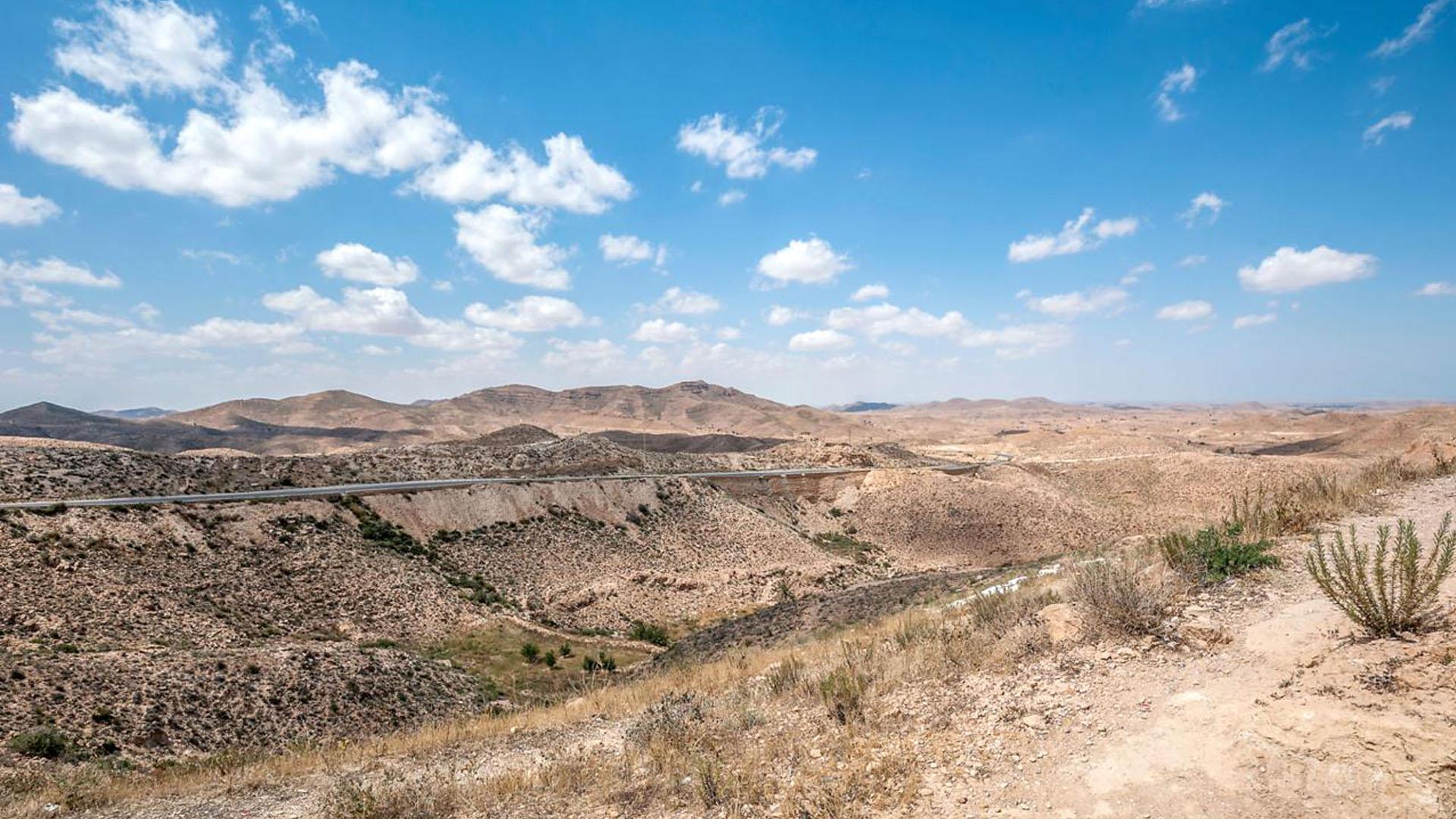
Tunisia has a long coastline, varied landscapes, and a climate that changes considerably from one region to another. Yet much of the country appears dry, dusty, and short of green spaces. Tunisia’s dry landscapes partly the result of low rainfall and heavy agricultural demand, but they are also part of its natural character—they are not a problem in themselves. But respecting a dry climate does not require us to accept that large areas must remain neglected, poorly maintained, or deprived of green spaces
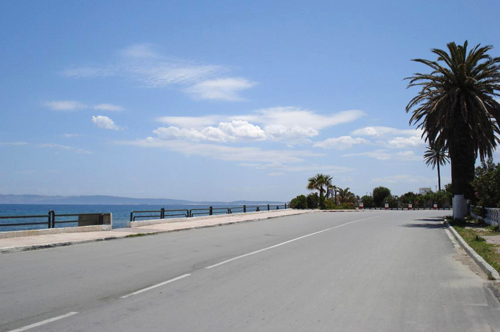
Our dry climate is not a question of water scarcity alone. The broader question is what kind of environment we want to create and whether we will give natural beauty a real place in the country’s development. The country has more possibilities than it currently makes use of.
When Production Becomes the Only Priority
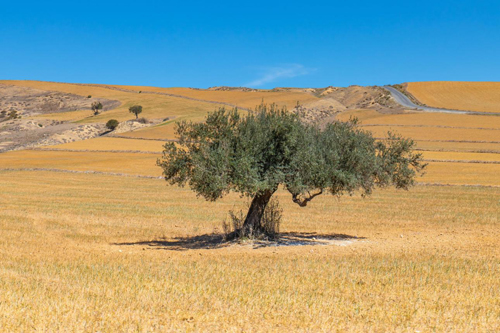
In general, societies measure the value of land in terms of what it can produce and how much money it can generate. Agriculture is essential, of course, and olive cultivation is an important part of Tunisia's economy and identity. The problem is not olive trees but the tendency to judge land mainly through its commercial return, while giving less attention to plant diversity, the natural landscape, and the quality of the environment.
Historically in Tunisia, agricultural priorities have reshaped rural landscapes over time. Under Roman and French rule, for example, northern Tunisia underwent successive changes in land use including periods of intensive exploitation. Today olive cultivation is enormously important, particularly in central and southern Tunisia.
But a country should not have to choose between agriculture and nature. It can support productive farming while also encouraging native trees, plants, and other vegetation suited to local soil and climate. Moreover not every plant needs to generate an immediate commercial return to deserve support. Some plants protect the soil, provide shade, support biodiversity, or simply make the places where people live more pleasant.
Turning this point into a concept requires a broader way of thinking about the land. In addition to asking what crops can be harvested in a particular area, we should also ask what kind of landscape can be created there.
Pollution Changes the Way a Place Feels
Waste and pollution are usually discussed as problems of municipal services, public sanitation, or environmental management. They are all these things, but the presence of waste and pollution in a place also changes the experience of the people who inhabit it.
A street covered in rubbish, an abandoned piece of land, or a polluted public space does more than look unpleasant. It sends a message that the place is not cared for. When such scenes become part of everyday life, people may gradually become accustomed to them. Neglect begins to seem normal, reducing people’s expectations of what public spaces should offer.
Ordinary people are not to blame for every environmental problem. Public services, infrastructure, planning, and local management all matter. Individual persons cannot be expected to maintain attractive public spaces when society does not properly provide for or care for those spaces.
The point is that a clean and attractive environment is not an optional extra. It is part of what makes a place worth living in.
Beauty Is a Form of Well-Being
Another reason we should take natural beauty seriously is that it affects everyday life.
Imagine a family living in a place where, near their home, there is a clean park, a line of trees, a lake, a walking path, and a safe place where children can play. The family is not wealthier than families living in places that lack those features. Their economic circumstances are the same, but the presence of greenery makes their daily lives very different.
In surroundings that are more pleasant, parents have somewhere to go in the evening. They can sit outside, walk, or spend time together without having to travel far or spend money. Children have room to play. Ordinary days offer more opportunities for rest and enjoyment.
This is no small matter. We do not measure development by income alone. Access to green and blue spaces has a positive relationship with mental health, although the benefits depend on the quality and characteristics of those spaces. Public spaces designed with children in mind have been shown to improve their health, development and well-being.
Of course, parks and lakes cannot replace jobs, decent wages, or public services. But neither should economic growth be treated as the only measure of a better life. People also need attractive surroundings, places to walk, spaces to meet, and opportunities to enjoy their environment.
Beauty is not a luxury reserved for wealthy societies. It is part of a decent standard of living.
A Different Way to Use Tunisia's Natural Resources
Tunisians need to think more seriously about how they can create and maintain green spaces across the country, from north to south. This should not mean planting the same trees everywhere or imposing one model on regions with different climates. Each area has its own soil, water resources, and environmental conditions. In each region, the approach should reflect those differences.
Water is central to this question. Tunisia faces serious pressure on its water resources, and the imbalance between regions is considerable. Most of the country's surface water is concentrated in the north, while the south receives much less rainfall and has fewer surface water resources. This makes it even more important for Tunisia to use available water carefully rather than relying on the continued extraction of groundwater.
Collecting rainwater is vital, but other options area worth developing and testing. For one, the country could improve its reuse of treated wastewater. In fact, Tunisia produces far more treated wastewater than it is actually reuses. The existing system needs better treatment, monitoring, and management.
Another possibility is the use of small-scale desalination systems, powered by renewable energy. Small local experiments could explore ways of using solar heat to evaporate seawater and collect the condensed fresh water.
Such experiments would not solve Tunisia's water shortage on their own, and their cost, efficiency, and environmental impact would have to be assessed. But the country should be willing to test practical ideas rather than relying on existing methods as the only possibilities.
Tunisians also have room to think differently about lakes, channels, and public landscapes. Where local conditions allow, we could create artificial lakes in suitable locations, including both freshwater and saltwater environments. Not every lake needs to supply irrigation water. Some could serve mainly as public spaces, natural features, or tourist attractions. Their design would have to account for evaporation, salinity, soil conditions, and possible effects on groundwater. The aim would be to create places that are useful, attractive, and environmentally appropriate.
The coastline could be part of this wider vision. Tunisia's coastal areas are not only economic assets or destinations for seasonal tourism. They could also become part of a broader network of public spaces, green areas, and carefully planned natural landscapes. And this network should not be limited to the larger coastal cities. The interior and southern regions should also benefit from investment in attractive public environments, adapted to their own conditions.
Development Should Leave People with a Better Place to Live
The question is not whether Tunisia can turn every dry area into a green landscape. It cannot, and it should not try. The real question is why we so rarely treat natural beauty, plant diversity, and attractive public spaces as essential parts of development.
A country can build roads, factories, and infrastructure but neglect its surroundings. It can increase production without making everyday life more pleasant. Economic activity matters, but it should not be the only standard by which we judge progress.
Tunisia needs a broader environmental vision, one that protects natural resources, uses water more intelligently, encourages suitable vegetation, reduces pollution, and creates public spaces where people actually want to spend time.
We should not be satisfied with simply protecting what remains of nature. We should also ask how to create better natural environments for the generations to come. From the north to the south, our goal should be to make Tunisia not only more productive but also greener where possible, cleaner, more attractive, and more comfortable to live in.
Natural beauty is not separate from development. On the contrary, it is something development should make possible.
Photo credits
Top: The distinctive dry landscape of Matmata in southern Tunisia. Photographer: Dhia04, Wikimedia license.
Center, left: The coastal landscape of Bizerte, Tunisia. Photographer: Hiba.dhaouadi, Wikimedia license.
Center, right: An olive tree in Testour, Tunisia, illustrating the country's agricultural landscape. Photographer: Smailtn, Wikimedia license.
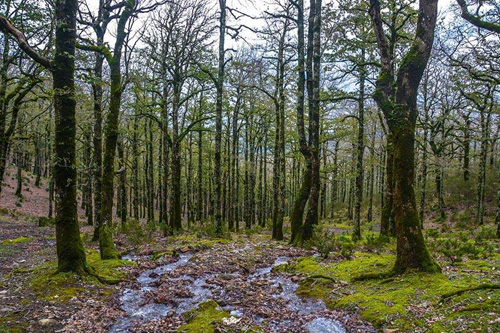
Bottom: Forest landscape in Aïn Draham, northern Tunisia. Photographer: Smailtn. Wikimedia license.
Reader conversation
Comments0
Share your perspective. Thoughtful replies help our newsroom understand what matters to you.