
In Bangladesh, mental illness is still discussed in whispers: a lowered voice, a changed subject, a quiet “Don’t tell anyone.” Behind those whispers are people, many of them carrying something heavy, alone.
At The Open Space, we took such conversations out of the whispers and onto Dhaka’s streets. Where is Dhaka’s largest open space? The street. Its most familiar sight? The rickshaw, part of our heritage, in a city of more than 20 million.
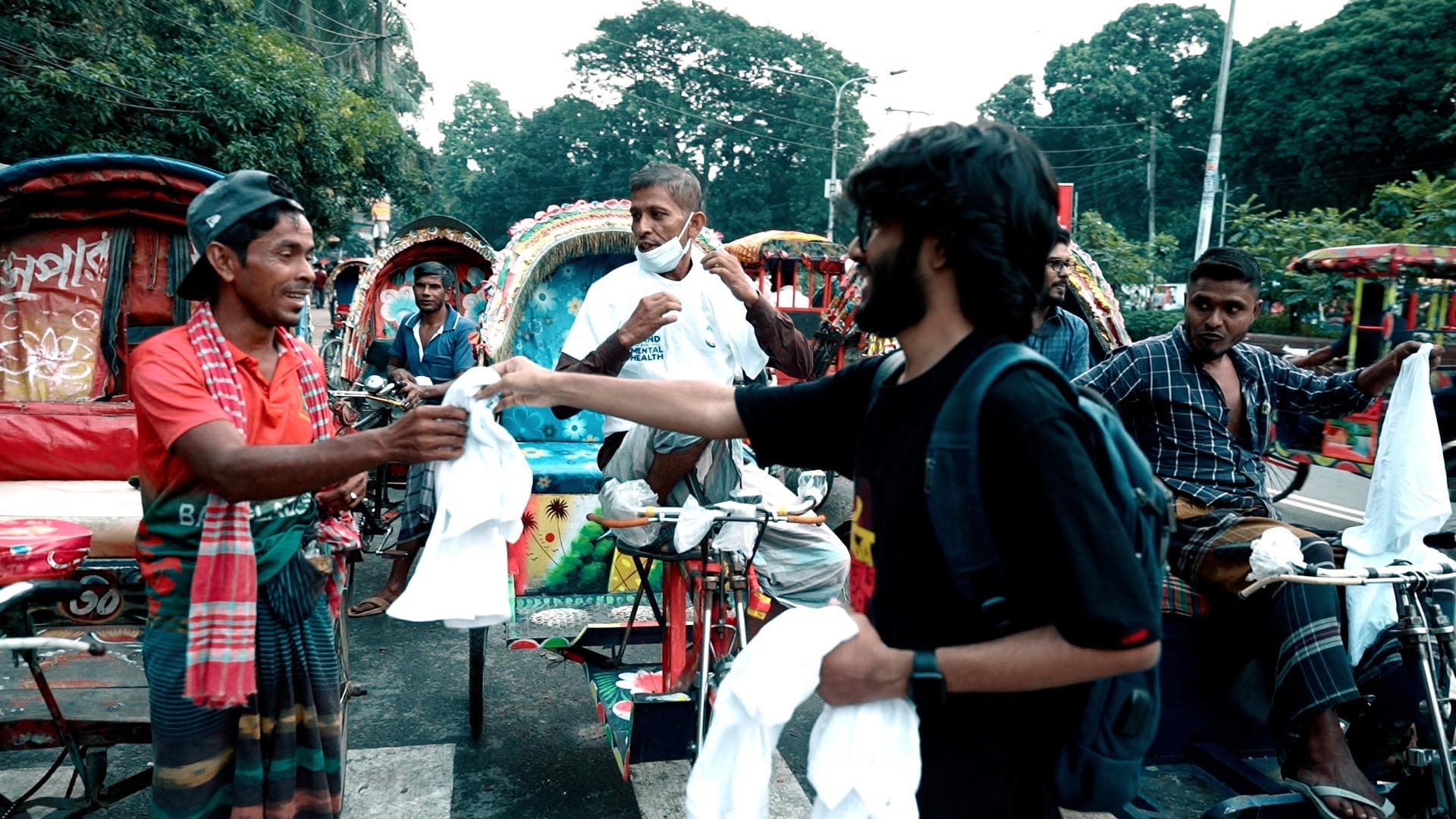
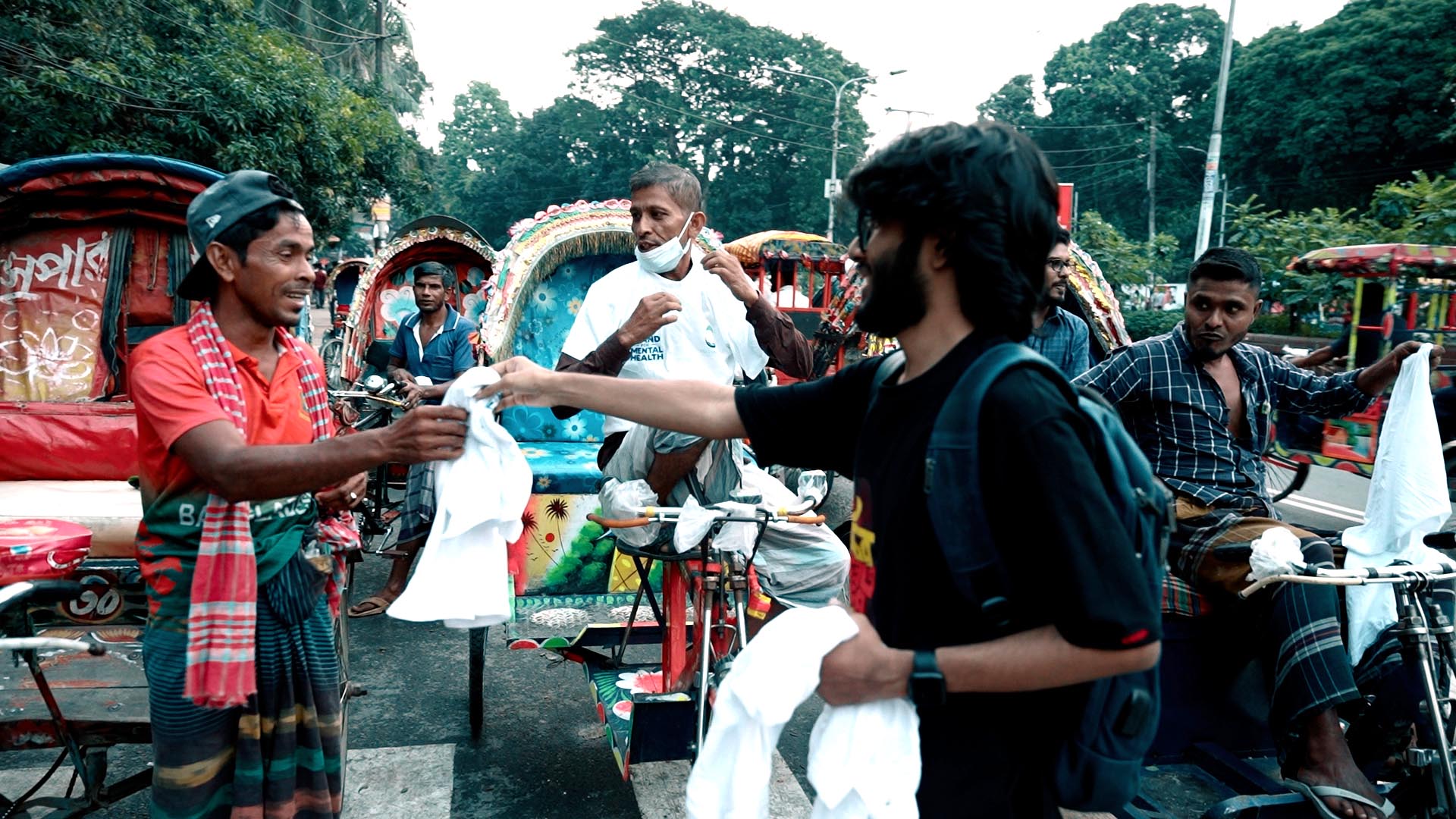
On World Mental Health Day, October 10, we launched মননে শহর; ঢাকা (Dhaka in Mind), a youth-led grassroots campaign. For seven days, until October 16, three hundred rickshaws carried our message, as the people who carry Dhaka’s passengers brought the conversation out into the open.
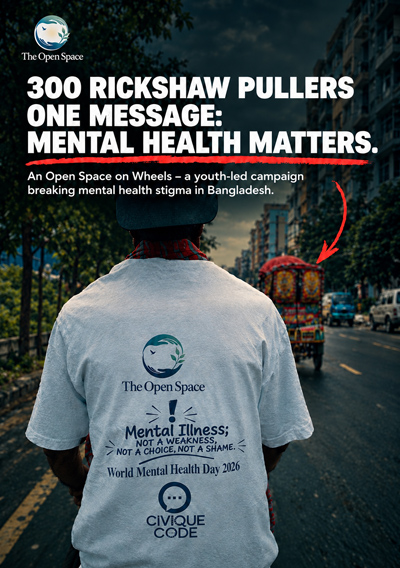
Each puller wore a T-shirt reading on the front “Stand For Mental Health.” On the back, the message varied. One asked, “You’re taking care of your body… who’s taking care of your mind?” Another read, “Mental illness; Not a weakness. Not a choice. Not a shame.”
The campaign was held in no fixed venue, required no registration, needed no invitation, except that we invited everyone to join in with #StandForMentalHealth.
We drew on street art and everyday life because a change in mindset has to begin where people already are. For a few seconds in traffic, a rickshaw became an open space on wheels, where a person could reflect without being judged.
The concept, developed by The Civique Code and organized by the Open Space, rests on a simple logic: stigma thrives on silence, so the response should be public, familiar, and demand nothing of those who witness it.
To our knowledge, it was the first mental health awareness campaign in Bangladesh to use rickshaws as its medium.
Forms of transport have carried messages before, but rarely at this scale: three hundred rickshaws, one city, over seven days. More than thirty organizations and clubs backed our campaign.
We estimate we got 100,000 to 150,000 passenger impressions on the streets. The campaign’s online reach is harder to determine, since partner clubs and members shared from their own accounts; but based on those numbers, if 3 to 6 percent of passengers shared what they saw, then the total could have reached 300,000 to 1.8 million.
Why did we choose the street? Because mental illness is not a weakness, and it is not a choice. It is a silent problem that deepens when ignored, and it needs solutions. For those who suffer from it, the stigma that turns a health condition into something shameful and hidden makes it all the harder to bear. And that stigma is real: people who dare to open up about their mental illness risk being labeled or dismissed. So many choose to stay quiet instead, absorbing the idea that something is wrong with them.
I’ve seen it in small moments: conversations that stop when they turn honest, help sought late or not at all, until finally the urgency became impossible to ignore.
Silence is therefore part of the problem, and it exists in countries everywhere. Mental illness deserves the same care as physical illness.
Public events alone are not enough to overcome the stigma: most care providers ask people to come to them, yet those who most need to hear that it is okay to talk about it are often the last to finally walk through the door seeking help.
That belief became the Open Space, a Dhaka-based well-being ecosystem founded in 2026, working across research, education, community healing, and public advocacy. On Suicide Prevention Day, our ten-day series Voices That Matter held a seminar and enacted a planchette debate, a staged, theatrical debate in which the causes of suicide were called up as villains. Drawing on research and lived experience, we gave the villain’s role to social evils: unemployment, mental health conditions left untreated, family conflict, harassment on social media, academic pressure, and parental expectations that allow no room for failure. No single one explains a life lost; they tend to pile up.
We asked our audience to turn against these evils themselves and never against someone who attempted suicide and survived. That person, on the contrary, deserves a warm welcome, support, and a society where no one has to face social evils alone. The event raised voices, named root causes and solutions, and pushed for a mindset shift. It was an impactful start for a young organization.
The name Open Space reflects our philosophy. An open space is a place where no one is judged, where talking is welcome, and where sharing feels safe. It is also a way of thinking: a person’s pain is not theirs alone to solve, and healing is something a community does together. Our slogan says the same: “Today’s unheard sufferer, tomorrow’s healing hand.” Someone who is heard becomes someone who can listen. We want to build a society like that, and an ecosystem for those who struggle as well as everyone else.
I do not imagine that a T-shirt will end stigma. But for anyone who read a rickshaw puller’s T-shirt that week and wondered who was taking care of their own mind, a whisper became a thought, and a thought can become a conversation. We are after a change in mindset: a little less judging, a little more listening. It is a conversation that moves and a model that any street-led city could adapt.
We dream of a society where support is part of everyday life, where people who are hurting are healed rather than hidden, and where everyone has room to live well. If one person struggling in silence feels a little less alone, the an open space will have done its work.


Reader conversation
Comments0
Share your perspective. Thoughtful replies help our newsroom understand what matters to you.